

Related Topics

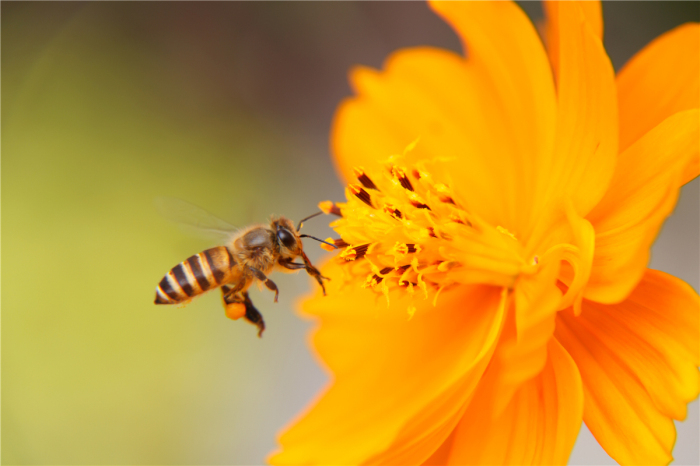
Honeybees (Apis mellifera) are widely recognized for their important role in pollinating crops and wild plants. However, new research suggests that they can also compete aggressively with other insects for food. A study conducted by researchers at Anglia Ruskin University in the United Kingdom found that honeybees frequently dominate flowers, sometimes preventing wild pollinators from collecting nectar and pollen. Although scientists already knew that honeybees could compete with other species by consuming shared food supplies, this study provides evidence that they also interfere directly with other insects through chasing, displacement, and intimidation. This behavior is known as interference competition.
The researchers observed pollinating insects at five locations around Cambridge, England, over two years. They focused on bramble (Rubus fruticosus) and common ivy (Hedera helix), two plants that provide important food sources when other flowers are less abundant. During 93 hours of observation, the scientists recorded 300 encounters between flower-visiting insects, including honeybees, bumblebees, solitary bees, and hoverflies. They examined whether insects shared flowers peacefully or whether one prevented another from feeding. The results showed that areas with more honeybees generally had fewer other pollinators. Honeybees also won more competitive encounters than expected, suggesting that their presence can influence which insects gain access to flowers.
One of the most interesting findings was how frequently other insects avoided honeybees. The researchers found that honeybees were avoided in approximately 28% of interactions on bramble flowers and 36% on ivy flowers. In at least 20% of honeybees’ winning encounters on both plants, they physically displaced or chased away another pollinator. Bumblebees, solitary bees, and hoverflies were among the insects affected. However, one species, the ivy bee (Colletes hederae), showed a different response. Unlike many other flower visitors, ivy bees sometimes challenged honeybees and successfully defended access to flowers. This suggests that different pollinator species may have different abilities to compete for limited food resources.
The findings raise important questions about how managed honeybee populations affect wild pollinator communities, particularly in places where many beehives are concentrated. The researchers also observed that warmer conditions were associated with more competitive encounters, suggesting that climate change could potentially intensify these interactions. However, the study focused on specific flowering plants and locations in the United Kingdom, so additional research is needed to understand whether similar patterns occur in other environments. The researchers emphasize that their findings are not intended to discourage beekeeping but to improve conservation strategies that allow honeybees and wild pollinators to coexist. Protecting diverse flowering habitats and understanding competition for nectar and pollen may help support healthier pollinator communities and the ecosystems that depend on them.
Reference
Buckle, V. A., Brown, P. M. J., Carter, T., & Ings, T. C. (2026). Honeybees directly outcompete other flower visitors through interference competition on shared resource. Ecological Entomology, 1–15. https://doi.org/10.1111/een.70139
AI Disclosure Statement:
The Chromoscience uses AI-assisted tools to support the preparation and editing of science articles. Content is reviewed by the editor for clarity and consistency with the cited research before publication. Readers are encouraged to consult the original scientific publications for complete findings, methods, and limitations.

Leave a Reply