
Related Topics

Editorial Disclosure — Science Commentary: This article is an independent science commentary based on previously published peer-reviewed research. It presents the author’s interpretations, perspectives, and reflections on the study’s findings rather than reporting original experimental research. Any opinions or broader scientific implications discussed are those of the author and should not be attributed to the original researchers. Readers are encouraged to consult the cited primary research for the complete scientific findings.
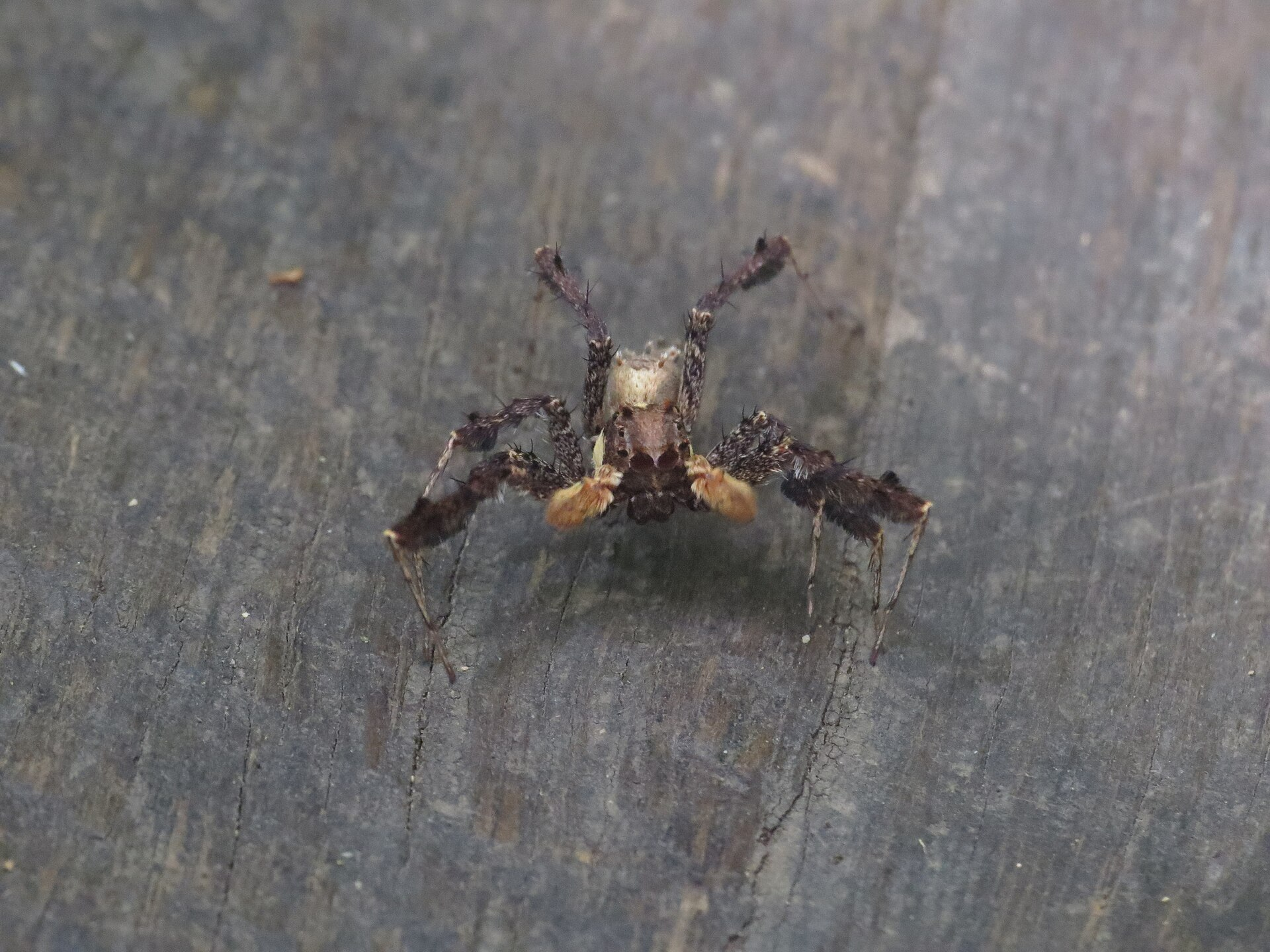
Sleep is something humans experience every day, yet scientists are still trying to understand why it is so important to life. We often associate sleep with animals that have complex brains, such as humans, dogs, and birds. However, recent research involving jumping spiders challenges the idea that sophisticated sleep patterns are limited to vertebrates. A study published in Proceedings of the National Academy of Sciences found behavioral evidence of two distinct sleep stages in jumping spiders, including a stage resembling rapid eye movement (REM) sleep (Geiger et al., 2026). This discovery encourages us to reconsider how we define sleep and raises an interesting possibility: some features of sleep may have evolved much earlier in animal history than we once imagined.
One fascinating aspect of this research is that jumping spiders have relatively small nervous systems compared with mammals, yet they display surprisingly complex behaviors. Jumping spiders are skilled visual hunters, capable of navigating their surroundings, identifying prey, and responding to environmental changes. These abilities make them particularly interesting animals for studying the relationship between sleep and brain function. In humans, sleep plays important roles in memory, learning, and the regulation of nervous system activity. Could sleep serve similar purposes in spiders? Although the study does not establish that spider sleep improves memory or learning, it opens an opportunity to explore whether different animals use sleep to maintain and organize information gathered during their waking hours.
The research also highlights why scientists must be cautious when interpreting animal behavior. Rapid eye movements and occasional leg twitching may remind us of a sleeping person or a dreaming pet, but similar movements do not necessarily mean that spiders experience dreams as humans do. Dreaming involves subjective experiences that are difficult to investigate even in animals closely related to us. Without direct measurements of spider brain activity, researchers cannot determine whether REM-like behavior represents the same neurological state found in humans. In my view, this uncertainty makes the discovery more interesting rather than less important. It reminds us that scientific progress often begins with observing an unexpected similarity, followed by carefully testing whether that similarity reflects a shared biological function.
Beyond its scientific implications, the study offers a broader lesson about appreciating small and frequently overlooked animals. Spiders are often regarded simply as predators, household visitors, or creatures to avoid, but they also possess intricate biological systems worthy of scientific attention. Research on their sleeping behavior demonstrates how studying invertebrates can expand our understanding of processes that affect nearly every aspect of animal life. It also raises important evolutionary questions: Did complex sleep stages arise independently in different animal groups, or do they reflect ancient biological mechanisms inherited from distant common ancestors? The answers remain uncertain, but investigations like this show that even a tiny spider resting on a strand of silk may provide valuable clues about one of biology’s most enduring mysteries.
Reference
Geiger, N., Capelle, M. Q., Rosentreter, P., Herberstein, M. E., Bahl, A., De Agrò, M., Klein, B. A., & Rößler, D. C. (2026). Behavioral evidence for two-stage sleep in spiders. Proceedings of the National Academy of Sciences, 123(45), e2618030123. https://doi.org/10.1073/pnas.2618030123
AI Disclosure Statement:
The Chromoscience uses AI-assisted tools to support the preparation and editing of science articles. Content is reviewed by the editor for clarity and consistency with the cited research before publication. Readers are encouraged to consult the original scientific publications for complete findings, methods, and limitations.

Leave a Reply