
Related Topics

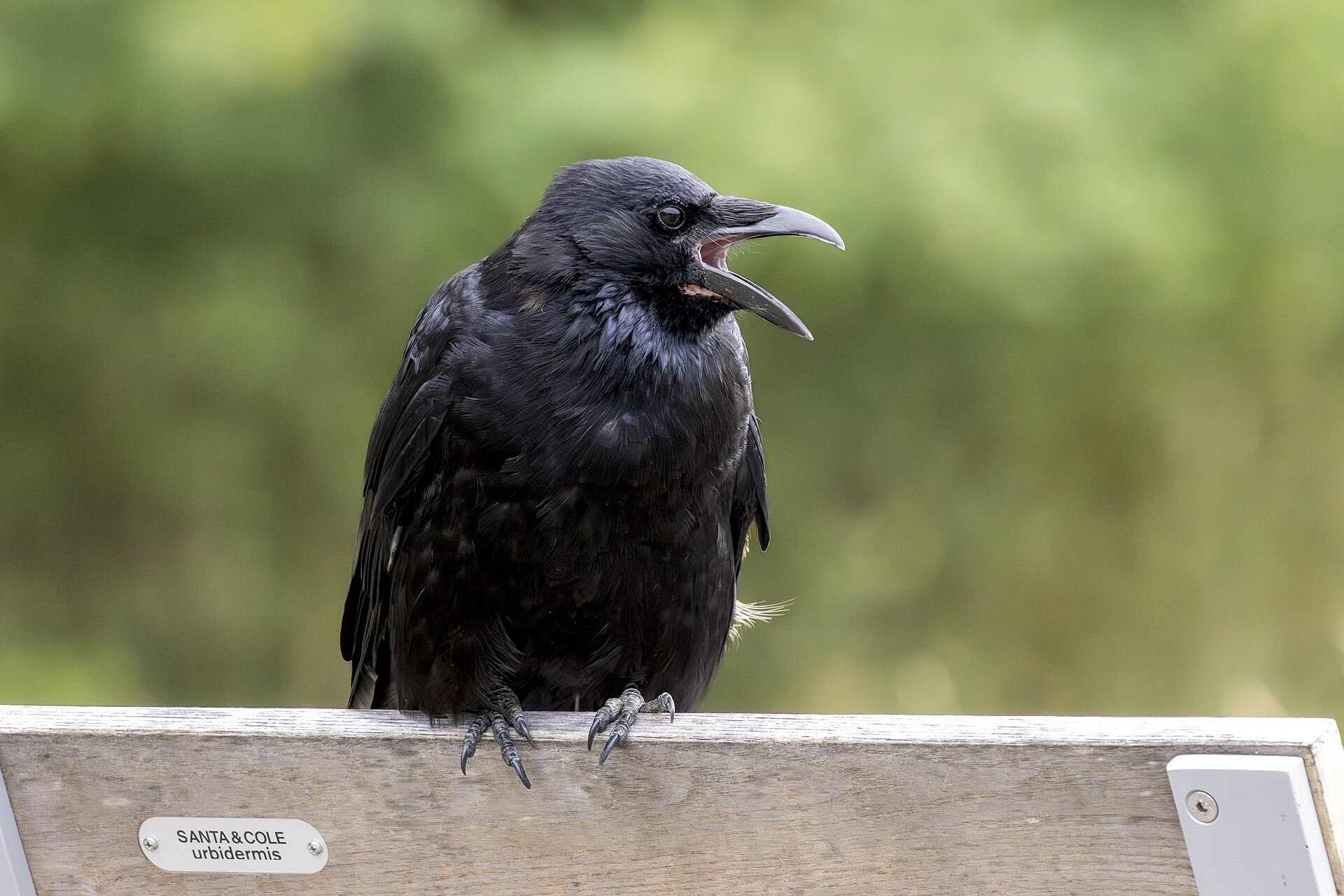
Alexis Lours, CC BY 4.0, via Wikimedia Commons.
Does making decisions faster mean an animal is more intelligent? This question has become particularly interesting following a scientific discovery involving crows. Researchers at the University of Tübingen in Germany found that carrion crows (Corvus corone) could make certain visual decisions approximately twice as fast as humans and monkeys tested in earlier studies. The birds took an average of just 235 milliseconds to identify the direction of moving dots on a screen while maintaining impressive accuracy (Schmidbauer & Nieder, 2026). At first glance, this might suggest that crows possess superior intelligence. However, intelligence is much more complicated than reaction speed. Humans, birds, and other animals have developed different mental abilities that help them survive in their environments. A crow’s ability to recognize movement quickly does not necessarily mean it can outperform humans in reasoning, language, or complex problem-solving. Instead, the discovery raises an important scientific question: should intelligence be measured by speed, or by how effectively an animal uses information to solve problems?
Intelligence involves more than making quick decisions. Scientists study animal intelligence by examining learning, memory, problem-solving, behavioral flexibility, and the ability to adapt to unfamiliar situations. Crows and their relatives, including ravens and jays, are especially interesting because they demonstrate several of these abilities. Some corvids can use tools, remember food locations, and adjust their behavior according to changing circumstances. Earlier research by Veit and Nieder (2013) demonstrated that neurons in the crow brain can represent abstract behavioral rules, allowing the birds to make decisions based on learned instructions rather than simply responding to familiar images. This finding suggests that crow intelligence involves flexible information processing, not just fast reactions. From a biological perspective, different types of intelligence may be valuable in different environments. For example, quickly detecting movement could help a bird avoid obstacles or locate food, while remembering previous experiences could help it make better decisions later. Neither ability alone provides a complete measure of intelligence.
One of the most fascinating aspects of crow intelligence is how their relatively small brains support sophisticated thinking. Human intelligence is strongly associated with the cerebral cortex, particularly the prefrontal cortex, which contributes to planning, attention, and decision-making. Birds do not possess the same layered neocortex found in mammals. Instead, their brains contain differently organized regions, including the nidopallium caudolaterale, which performs some functions comparable to those of the mammalian prefrontal cortex. Research has shown that this region helps crows process information and follow abstract rules (Veit & Nieder, 2013). The recent study by Schmidbauer and Nieder (2026) adds evidence that the neural processes underlying rapid visual decisions in crows resemble those observed in primates. This comparison illustrates an important evolutionary principle: animals do not always need identical brain structures to perform similar cognitive tasks. Birds and mammals followed different evolutionary paths, yet both developed neural systems capable of supporting complex behavior.
The new discovery challenges the assumption that human-like intelligence must depend on a human-like brain, but it does not establish that crows are smarter than people. The experiment involved only two crows performing a particular visual decision-making task, and the comparison with primates relied on previously published findings rather than a simultaneous experiment under identical conditions. Additional research involving more birds, other species, and different types of cognitive tasks would help scientists understand whether rapid decision-making is widespread among birds or especially developed in corvids. Future studies could also investigate whether the speed advantage reflects specialized neural organization, ecological adaptations, or other biological mechanisms. In my interpretation, the most important lesson is not that one species is more intelligent than another, but that intelligence cannot be reduced to a single measurement. Evolution has produced many ways of processing information, and each may offer advantages under different conditions. Rather than asking whether crows are smarter than humans, perhaps a more useful scientific question is how different animals have evolved the cognitive abilities they need to succeed in their environments.
References
Schmidbauer, P., & Nieder, A. (2026). Ultrarapid decision-making in an avian brain. Science. https://doi.org/10.1126/science.aed6459
Veit, L., & Nieder, A. (2013). Abstract rule neurons in the endbrain support intelligent behaviour in corvid songbirds. Nature Communications, 4, Article 2878. https://doi.org/10.1038/ncomms3878
AI Disclosure Statement:
The Chromoscience uses AI-assisted tools to support the preparation and editing of science articles. Content is reviewed by the editor for clarity and consistency with the cited research before publication. Readers are encouraged to consult the original scientific publications for complete findings, methods, and limitations.



Leave a Reply