
Related Topics

Editorial Disclosure — Science Commentary: This article is an independent science commentary based on previously published peer-reviewed research. It presents the author’s interpretations, perspectives, and reflections on the study’s findings rather than reporting original experimental research. Any opinions or broader scientific implications discussed are those of the author and should not be attributed to the original researchers. Readers are encouraged to consult the cited primary research for the complete scientific findings.
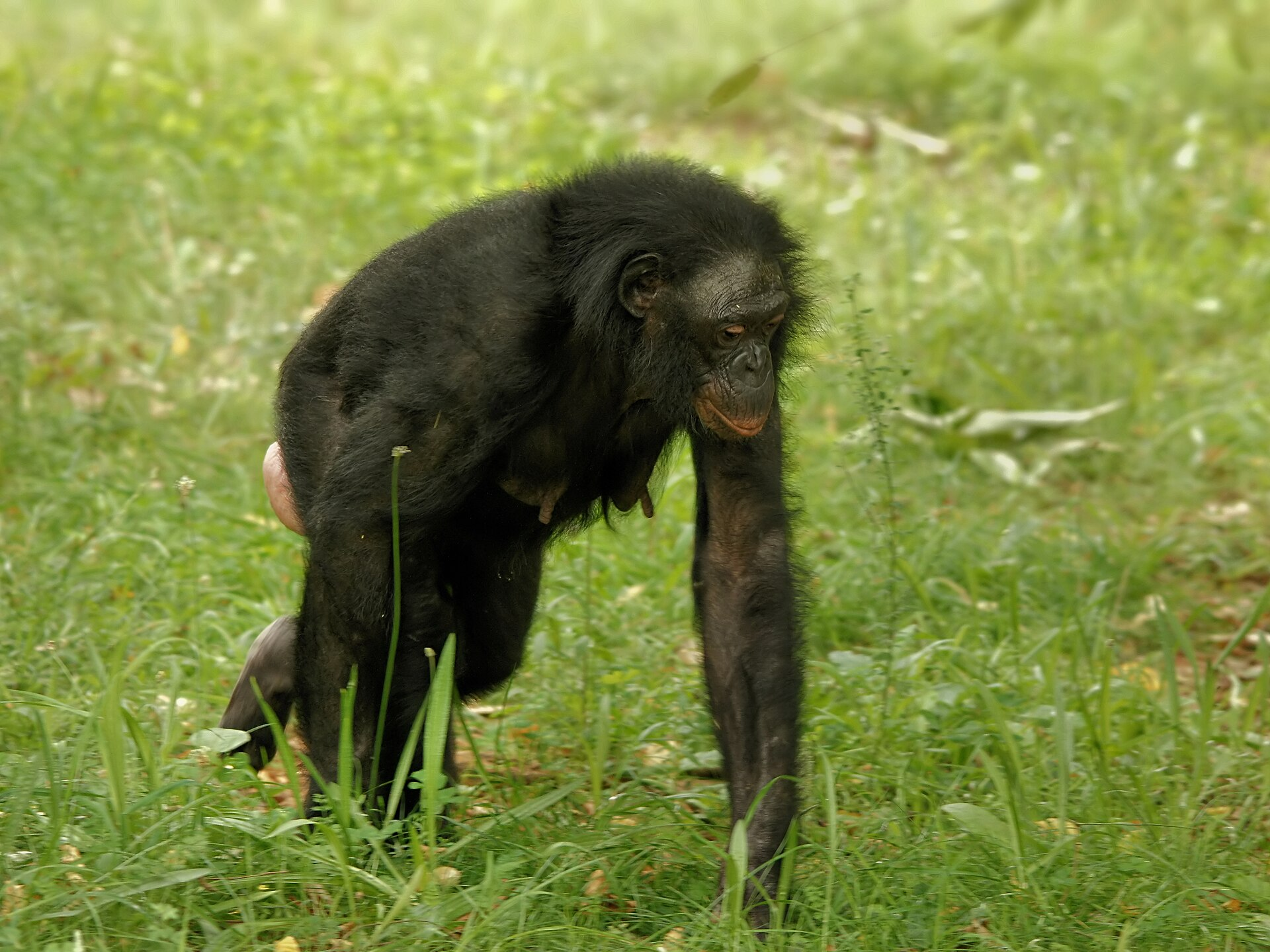
For many years, hunting has often been associated with males, particularly when scientists discuss the evolution of early humans. The traditional image of prehistoric societies frequently portrays men hunting animals while women gather plants and care for their families. However, nature does not always follow these familiar assumptions. A recent study published in Current Biology found that female bonobos (Pan paniscus) play important roles in hunting vertebrate animals, including monkeys and hoofed mammals (Hohmann et al., 2026). This discovery raises an interesting question: Have we underestimated the role of females in the evolutionary history of hunting? Although bonobos cannot tell us exactly how our ancestors behaved, their hunting activities offer another perspective on the possible diversity of hunting strategies among early human relatives.
One particularly interesting aspect of this research is how hunting behavior varies between male and female bonobos. According to Hohmann et al. (2026), both sexes participate in hunting tree-dwelling primates at similar rates, while females account for most captures of other vertebrate prey. Younger females are also more involved in hunting primates, whereas older females more frequently capture hoofed mammals. These differences suggest that hunting is not simply determined by biological sex but may also involve age, experience, opportunity, and social relationships. From a biological perspective, this is important because animal behavior often develops through interactions between inherited characteristics and environmental conditions. Rather than assuming that males and females have fixed responsibilities, researchers can investigate how their behaviors change depending on circumstances.
The social organization of bonobos makes these findings even more interesting. Unlike many chimpanzee communities, where males generally dominate social relationships, bonobo societies are known for strong female alliances and relatively high female social status. This raises the possibility that social relationships influence access to food and opportunities to hunt. If females can participate actively in hunting within a society where they maintain considerable social influence, perhaps hunting behavior is more flexible than traditional explanations suggest. However, it would be an oversimplification to conclude that female social status alone explains these findings. Differences in prey availability, habitat conditions, individual experience, and community traditions may also contribute. The study encourages scientists to consider several biological and ecological explanations rather than relying on a single assumption about sex differences (Hohmann et al., 2026).
In my view, the most valuable lesson from this research is not that females were necessarily the primary hunters in early human societies, but that we should be careful when using modern animal behavior to reconstruct the distant past. Bonobos and chimpanzees are both closely related to humans, yet their social systems and hunting strategies differ considerably. Neither species represents a perfect model of our ancestors. Instead, studying their differences helps reveal the range of behaviors that can evolve among closely related species. This research also reminds us that scientific understanding changes as new observations challenge established ideas. By examining the behavior of both sexes and considering the influence of ecology and social relationships, scientists can develop a more complete understanding of primate evolution and perhaps a less restrictive picture of how hunting developed in our own evolutionary lineage.
Reference
Hohmann, G., et al. (2026). Females shape hunting of vertebrates in wild bonobos. Current Biology. https://doi.org/10.1016/j.cub.2026.09.082
AI Disclosure Statement:
The Chromoscience uses AI-assisted tools to support the preparation and editing of science articles. Content is reviewed by the editor for clarity and consistency with the cited research before publication. Readers are encouraged to consult the original scientific publications for complete findings, methods, and limitations.

Leave a Reply