

Related Topics

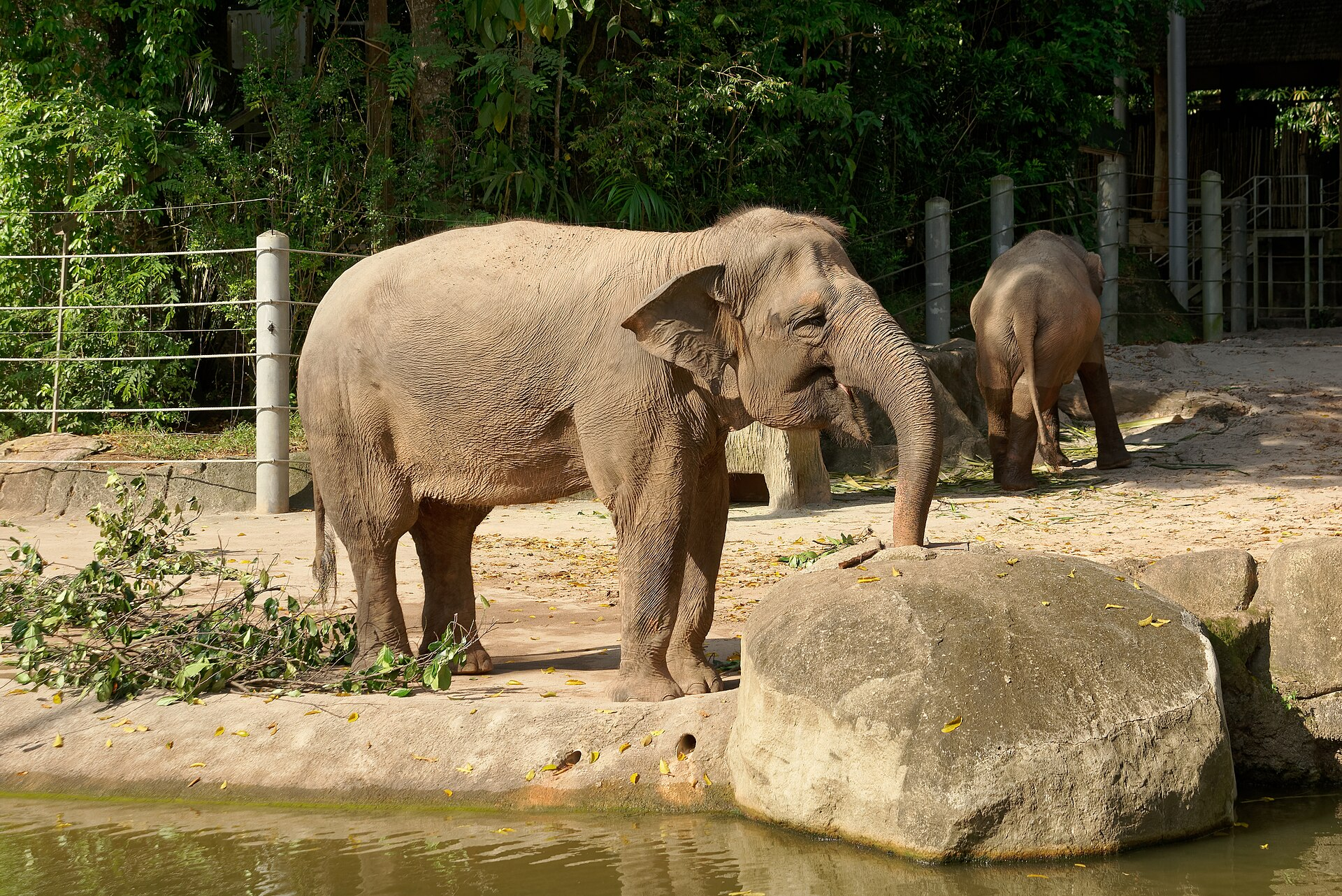
Elephants are highly social animals that depend on strong relationships to survive. They live in groups where individuals help one another find food, share information, and care for their young. However, a new study published in the journal Science suggests that losing members of an elephant population can cause more than a decline in numbers. It can also damage the relationships that hold their communities together. Researchers from the University of California San Diego and collaborating institutions discovered that gradual losses of Asian elephants can eventually cause their social networks to break apart into smaller, more isolated groups.
To understand how elephant communities change over time, the researchers examined the social relationships of 443 wild female Asian elephants in Udawalawe National Park in Sri Lanka. Over 12 years, they tracked individual elephants and studied how their social connections changed as members entered or disappeared from the population. The researchers found that elephants were leaving the population faster than new individuals were joining. Some elephants may have died, while others may have permanently moved elsewhere. As these losses accumulated, the elephants’ social networks became less connected, eventually separating into smaller communities.
One of the most important findings was that the loss of elephants affected relationships among those that remained. The researchers observed that social connections were changing even between elephants that were still present. Some weaker relationships disappeared, reducing the connections between different social groups. This suggested that the elephant communities had reached what scientists call a social tipping point, a stage when gradual changes lead to a major shift in how a community functions. Although elephants continued to maintain some social relationships, their overall communities became more fragmented and isolated. Such changes could make it harder for elephants to exchange information, find resources, and support one another.
The findings have important implications for wildlife conservation. Asian elephants already face threats from habitat loss, human-elephant conflict, and other environmental pressures. This research suggests that protecting elephants involves more than maintaining their population numbers. Conservation programs may also need to consider how individuals interact and whether their social communities remain connected. Because the study was observational, it does not establish exactly what caused every elephant to disappear or how the changes affected survival. However, it provides evidence that population losses can be followed by major changes in animal social organization. The researchers suggest that monitoring social relationships could help scientists recognize early warning signs of trouble before wildlife communities become increasingly difficult to restore.
References
Madsen, A. E., Pushpakumara, T. V., Weerathunga, U. S., Weerakoon, D. K., & de Silva, S. (2026). Increased demographic turnover and isolation precede social fragmentation in Asian elephants. Science, 394(6825), 792–798. https://doi.org/10.1126/science.aef6714
Aguilera, M. (2026). Elephants found to be increasingly isolated, leading to fractured social networks. University of California San Diego. https://today.ucsd.edu/story/elephants-found-to-be-increasingly-isolated-leading-to-fractured-social-networks
AI Disclosure Statement:
The Chromoscience uses AI-assisted tools to support the preparation and editing of science articles. Content is reviewed by the editor for clarity and consistency with the cited research before publication. Readers are encouraged to consult the original scientific publications for complete findings, methods, and limitations.



Leave a Reply