

Related Topics

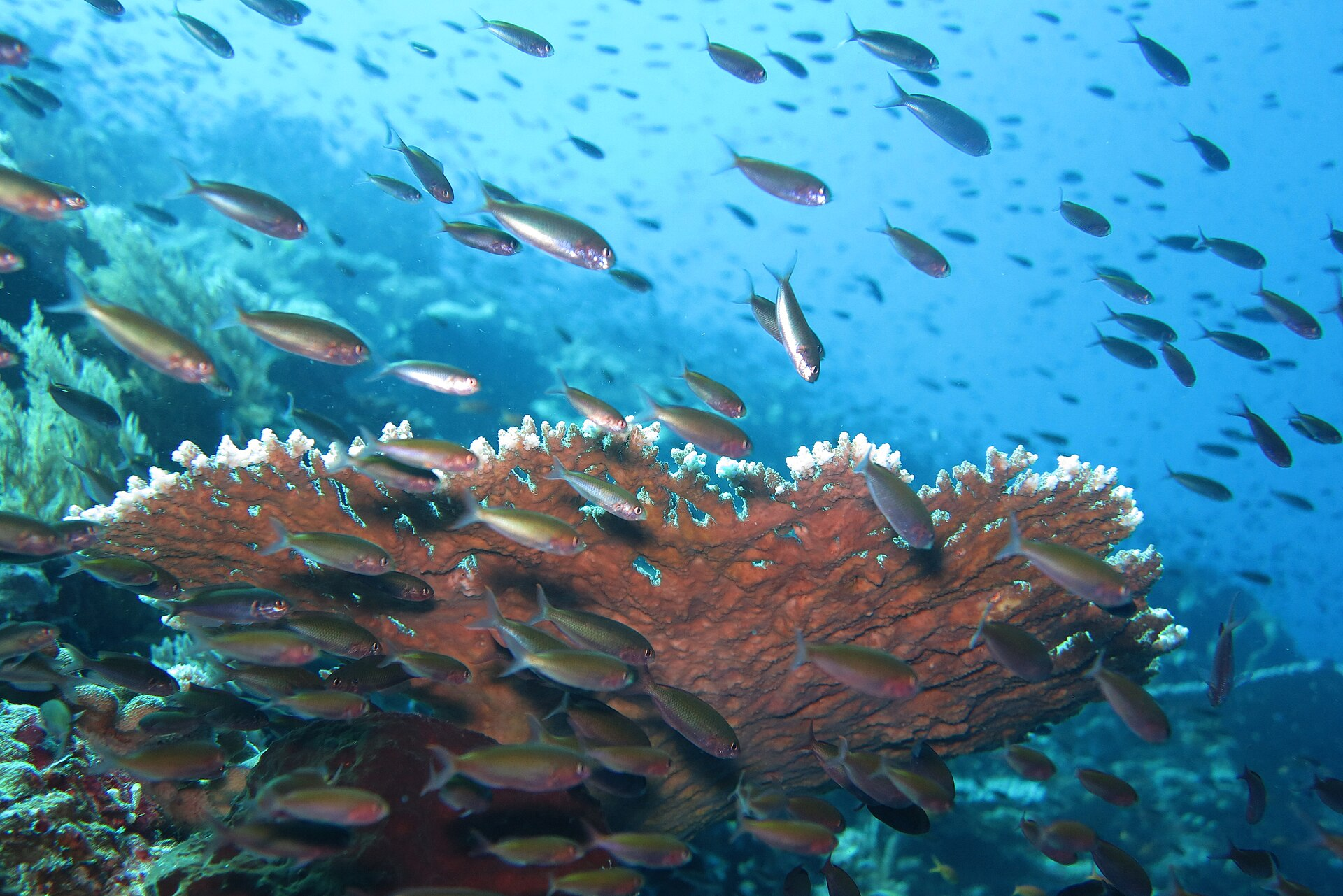
Fish swimming together in coordinated groups, known as schools, are a familiar sight in oceans, rivers, and lakes. Scientists have long believed that this behavior helps fish avoid predators, locate food, and survive in changing environments. However, researchers have not fully understood how schooling behavior evolved or why some fish species swim together while others live more independently. A study published in Proceedings of the National Academy of Sciences investigated these questions by examining the evolutionary history of ray-finned fishes, the largest group of vertebrates. Researchers from Cornell University and collaborating American institutions found that collective movement is closely connected to the ecological conditions and evolutionary history of fish species.
To investigate these patterns, the researchers used artificial intelligence and machine learning to analyze scientific texts and images describing the behavior of 2,839 ray-finned fish species, representing nearly 10% of living fish species. They compared these behaviors across the evolutionary family tree of fishes to determine how frequently collective movement appeared or disappeared. Their analysis identified more than 300 evolutionary changes involving collective movement. Some groups of fish maintained schooling behavior over long evolutionary periods, while others repeatedly gained or lost it. These findings suggest that schooling is not simply a permanent characteristic inherited from ancient ancestors but a behavior that can change as species evolve.
The researchers also examined why schooling might be advantageous in certain environments. They discovered that collective movement was associated with greater predation pressure and diets involving food resources that are unevenly distributed. Swimming together may help fish detect approaching predators, reduce individual risks, and locate concentrated food supplies. Interestingly, the study also found that fish lineages that evolved collective movement tended to have higher rates of net evolutionary diversification, meaning their groups experienced a greater balance of species formation over extinction. This suggests that social behavior may be associated not only with individual survival but also with the long-term diversity of fish species.
These findings provide important insights into how interactions among animals may influence evolution and biodiversity. Rather than viewing evolution only through the physical characteristics of individual organisms, the study highlights how group behavior may also be associated with the development and diversification of species. However, the research was based on comparisons across species, so it does not prove that schooling directly causes faster evolutionary diversification. Other ecological and evolutionary factors may contribute to the relationship. Future studies could investigate the advantages and disadvantages of group living and how environmental changes affect collective movement. Overall, the research demonstrates that understanding how animals interact can help scientists better understand the processes shaping biodiversity throughout Earth’s history.
References
Love, J., Nayak, A., Grassick, A. G., Kong, L.-W., Henry, E. G., Gil, M. A., Fahimipour, A. K., Pennell, M., & Hein, A. M. (2026). Evolutionary dynamics of collective behavior across the tree of ray-finned fishes. Proceedings of the National Academy of Sciences, 123(45), e2611720123. https://doi.org/10.1073/pnas.2611720123
Cornell University. (2026, November 9). Machine learning reveals how often fish schooling evolved—and repeatedly disappeared. Phys.org. https://phys.org/news/2026-11-machine-reveals-fish-schooling-evolved.html
AI Disclosure Statement:
The Chromoscience uses AI-assisted tools to support the preparation and editing of science articles. Content is reviewed by the editor for clarity and consistency with the cited research before publication. Readers are encouraged to consult the original scientific publications for complete findings, methods, and limitations.



Leave a Reply