
Related Topics

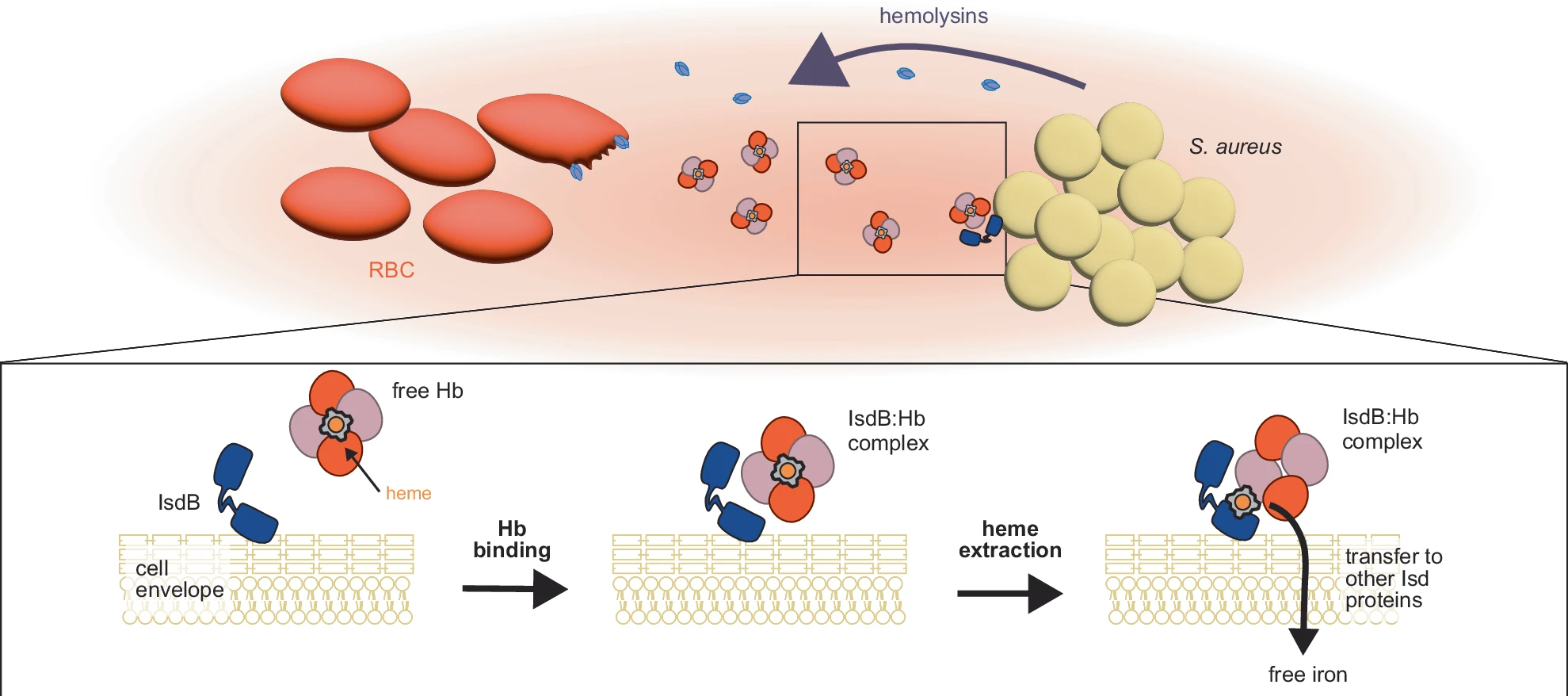
Researchers have discovered how Staphylococcus aureus bacteria get iron from hemoglobin—an essential component for their survival during infections. The European Synchrotron, Grenoble, France, has found the whole sequence of protein–protein interactions during this iron “robbery,” using a revolutionary time-resolved X-ray solution scattering (TR-XSS) approach.
Published in Nature Communications, the results provide ways for creating drugs to fight S. aureus strains resistant to antibiotics.
Common bacterium Staphylococcus aureus exists harmlessly on many people’s skin and nasal passages. But it can occasionally penetrate immune defenses and surface barriers, frequently through wounds, resulting in skin infections that can progress to life-threatening sepsis or problems such as pneumonia.
S. aureus infections are frequently treated with antibiotics; however, certain strains of this bacterium are becoming increasingly resistant to preexisting medications. Consequently, it is a top goal to better learn how S. aureus survives and grows in human bodies.
The ESRF has conducted experimental research that has provided an unprecedented level of detail on the process by which S. aureus bacteria acquire iron from our blood to facilitate their proliferation. S. aureus is capable of extracting iron from the hemoglobin (Hb) in our red blood cells by utilizing a protein known as IsdB. The procedure had been investigated indirectly via optical means. But nobody had documented the whole series of molecular processes using a method capable of directly probing transient structural changes of a protein.
Sources:
Omar De Bei et al. (2025). Time-resolved X-ray solution scattering unveils the events leading to hemoglobin heme capture by staphylococcal IsdB, Nature Communications. DOI: 10.1038/s41467-024-54949-w
https://phys.org/news/2025-02-staphylococcus-aureus-iron-blood-infections.html
AI Disclosure Statement:
The Chromoscience uses AI-assisted tools to support the preparation and editing of science articles. Content is reviewed by the editor for clarity and consistency with the cited research before publication. Readers are encouraged to consult the original scientific publications for complete findings, methods, and limitations.