

Related Topics

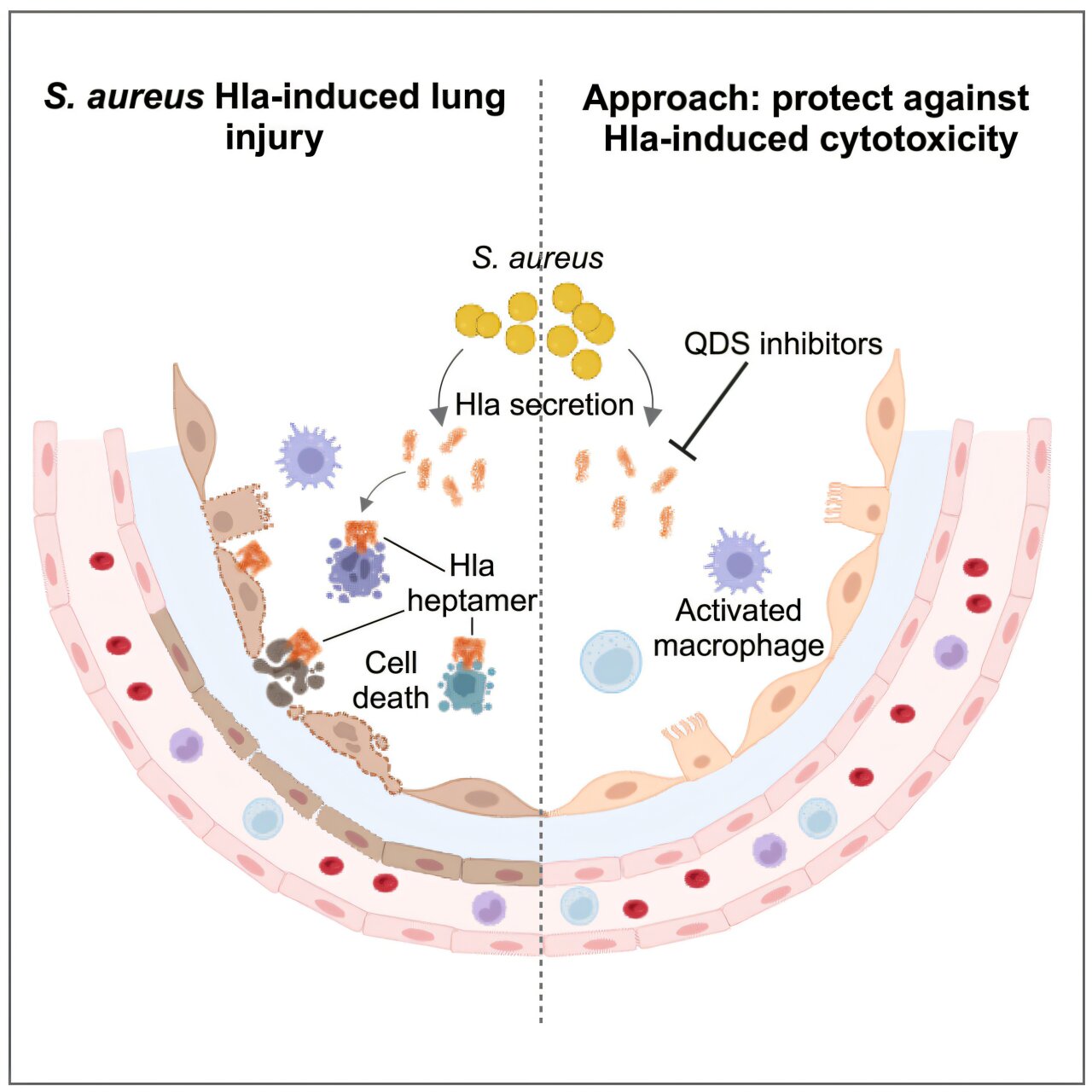
A promising new therapeutic candidate against serious lung infections brought on by the hospital bacterium Staphylococcus aureus has been found by an international research team lead by the Helmholtz Center for Infection Research (HZI). Described for the first time in a recent Cell Host & Microbe article, tiny compounds from the quinoxalinedione class precisely inhibit the bacterial toxin alpha-hemolysin, a major cause of tissue injury and inflammation.
One of the most deadly illnesses possible in hospital settings is pneumonia brought on by the bacterium Staphylococcus aureus. Especially concerning are multi-resistant bacteria against which several drugs are no longer useful. These diseases are common all throughout the world and provide a significant difficulty even for contemporary health care systems. Though under rigorous treatment, patient death rates exceed 20%.
Infections with Staphylococcus aureus are sometimes challenging to treat even with good medications. This new approach so specifically neutralizes a toxin the Staphylococcus aureus makes rather than attacking the bacteria itself. This opens up a new treatment viewpoint—particularly for severely ill patients at high risk.
The particular inhibition of the main virulence factor alpha-hemolysin protein is the goal of this novel study method. The protein creates holes in lung cell membranes, hence destroying lung tissue and immune cells, causing inflammation and finally aggravating the condition.
The researchers created a miniaturized test device that let them screen more than 180,000 chemicals for their capacity to inhibit the impact of alpha-hemolysin. Particularly the chemical H052 from the quinoxalinedione class turned out to be quite successful in both animal models and cell culture.
The aim was to develop a chemical that counteracts the toxic substance before it harms—that is precisely what the quinoxalindiones accomplish. It was especially remarkable that we could not only safeguard cells but also greatly increase survival in infected mice.
In the mouse model, the active component could raise the survival rate in the event of an acute lung infection with the extremely virulent S. aureus USA300 strain, whether when given preventively or therapeutically. Inflammatory indicators and the bacterial load in the lungs of immunocompetent mice were lowered at the same time. H052’s combination with the antibiotic linezolid was similarly successful.
Sources:
Highly potent quinoxalinediones inhibit a-hemolysin and ameliorate Staphylococcus aureus lung infections, Cell Host & Microbe (2025). DOI: 10.1016/j.chom.2025.03.006. www.cell.com/cell-host-microbe … 1931-3128(25)00089-7
https://phys.org/news/2025-04-agent-inhibits-staphylococcus-aureus-toxin.html
AI Disclosure Statement:
The Chromoscience uses AI-assisted tools to support the preparation and editing of science articles. Content is reviewed by the editor for clarity and consistency with the cited research before publication. Readers are encouraged to consult the original scientific publications for complete findings, methods, and limitations.



