

Related Topics

The microbiota that lives in and around tumors is an important part of the microenvironment of all types of human cancer. So far, most studies of the relationship between the host and the microbiota inside a tumor have used bulk tissue analysis, which makes it hard to see how the microbiota are distributed and how they affect different parts of the tumor.
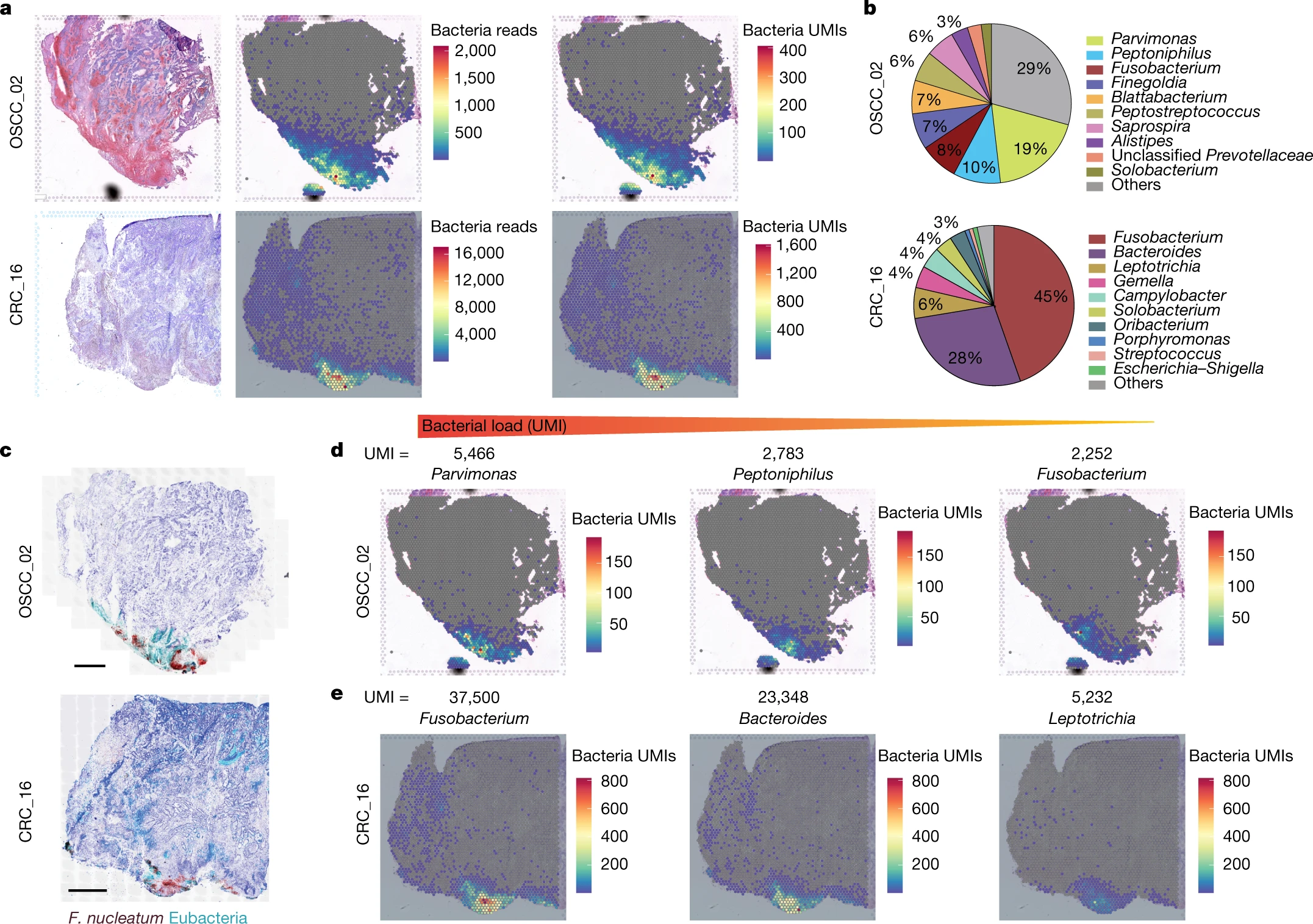
Researchers use spatial-profiling technologies and single-cell RNA sequencing on oral squamous cell carcinoma and colorectal cancer to find out how the host and microbes interact in space, at the level of individual cells, and at the molecular level. They adapted 10x Visium spatial transcriptomics to find out the identity of the intratumoral microbial communities and where they were in patient tissues. Using GeoMx digital spatial profiling, researchers show that bacterial communities live in micro niches that have less blood flow, are more immunosuppressive, and have malignant cells with lower Ki-67 levels than tumor regions without bacteria.
Researchers made a single-cell RNA-sequencing method that they call INVADEseq (invasion-adhesion-directed expression sequencing). When they used it on patient tumors, they found cell-associated bacteria and the host cells with which they interact. They also found changes in transcriptional pathways that are involved in inflammation, metastasis, cell dormancy, and DNA repair. They know that cancer cells that are infected with bacteria invade their surroundings as single cells and bring myeloid cells to areas where bacteria are.
Together, the research shows that the microbiota in a tumor is not spread out at random. Instead, it is highly organized into micro niches where immune and epithelial cells work in ways that help cancer spread.
Source:
Galeano Niño, J. L., Wu, H., LaCourse, K. D., Kempchinsky, A. G., Baryiames, A., Barber, B., Futran, N., Houlton, J., Sather, C., Sicinska, E., Taylor, A., Minot, S. S., Johnston, C. D., & Bullman, S. (2022). Effect of the intratumoral microbiota on spatial and cellular heterogeneity in cancer. Nature, 10.1038/s41586-022-05435-0. Advance online publication. https://doi.org/10.1038/s41586-022-05435-0
AI Disclosure Statement:
The Chromoscience uses AI-assisted tools to support the preparation and editing of science articles. Content is reviewed by the editor for clarity and consistency with the cited research before publication. Readers are encouraged to consult the original scientific publications for complete findings, methods, and limitations.



