
Related Topics

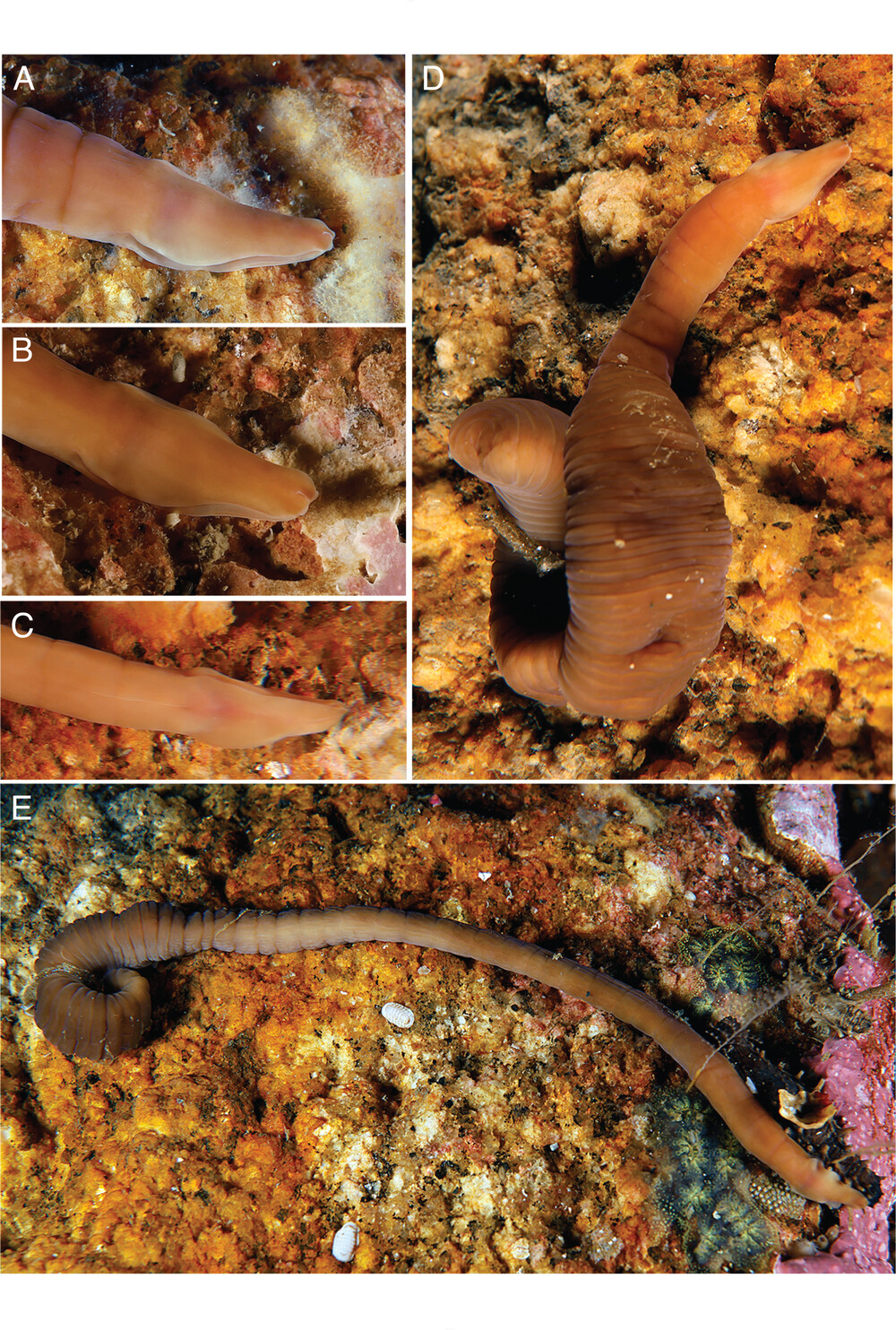
What exists off Spain’s Northwest shores and minimizes to 20% when disturbed? Here comes the accordion worm. The newly discovered marine ribbon worm, which is brown to dark green, is 110–250 mm long and 3–4 mm wide in its undisturbed condition and can extend and contract to form regular dark-colored ring-like folds like the bellows of an accordion instrument.
The new species discovered during sport dives in Ría de Arosa, Spain, belongs to the Nemertea phylum, a predatory worm group that disables victims with venom. Spain, Guam, and US researchers called it Pararosa vigarae in a Royal Society Open Science paper.
Taxonomy, the study of classifying and identifying living things, helps us understand their evolutionary histories and interactions with other species and the environment.
Ribbon worms have been challenging to classify because they were typically characterized by their exterior traits. These organisms have few obvious features to rely on. Research on internal anatomy as an identifier is slowing down due to its tediousness and complexity.
Ribbon worms are a lesser-known species, and researchers believe their true diversity is significantly higher than 1,350 species.
The newly identified species was taken from the subtidal zone at 30 meters for this study. Six specimens lived under rocks and shells. The researchers used visual features and DNA data to outperform earlier identification and classification approaches.
After imaging and morphology procedures, the specimens were stabilized and protected in RNAlater, a non-toxic aqueous solution, and stored at −80°C for DNA extraction.
Molecular and genetic study of small sections of 16S, 18S, 28S, COI, and histone H3 genes from the posterior end of each sample confirmed a Lineidae lineage of the worm.
Imaging examinations found that the recently discovered Pararosa vigarae, or accordion worm, compresses its body to generate regular rings of annular epidermal constrictions that are evident even when completely extended. The largest worm has 60 rings when fully stretched.
The study adds Pararosa vigarae to the ribbon worm phylum’s group of overlooked invertebrates. The researchers also highlight that combining morphological and molecular data accelerates nemertean diversity and evolution research.
Sources:
Aida Verdes et al. (2025). The accordion worm: a new genus and species of heteronemertean (Nemertea, Pilidiophora) from Galicia (Spain), Royal Society Open Science. DOI: 10.1098/rsos.250313
Previously unknown accordion worm discovered off the coasts of Spain. https://phys.org/news/2025-05-previously-unknown-accordion-worm-coasts.html
AI Disclosure Statement:
The Chromoscience uses AI-assisted tools to support the preparation and editing of science articles. Content is reviewed by the editor for clarity and consistency with the cited research before publication. Readers are encouraged to consult the original scientific publications for complete findings, methods, and limitations.