

Related Topics

Wikimedia Commons.
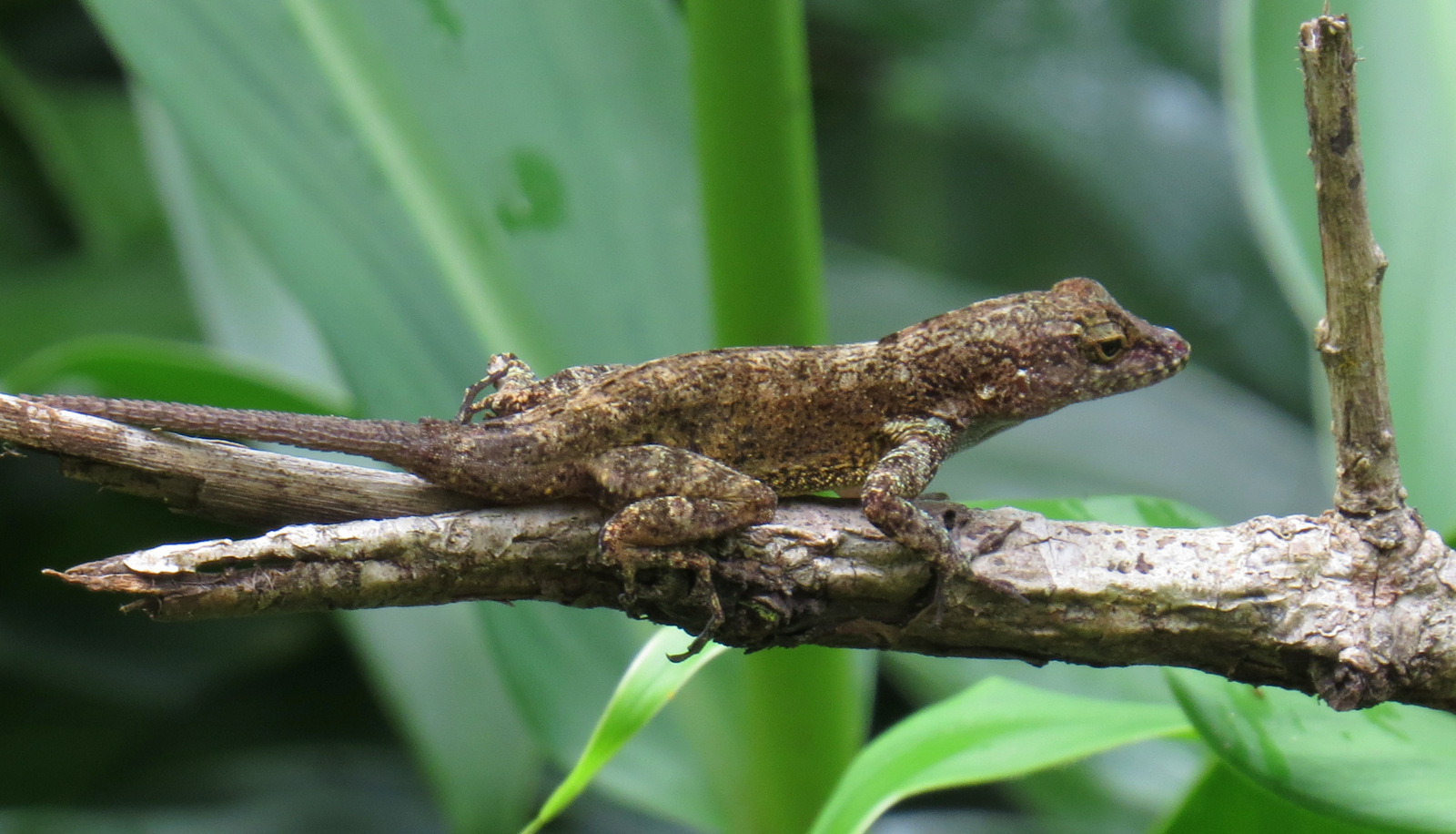
A new study conducted by researchers from Yale University, the University of Alabama, the University of Toronto, and the University of Texas at Arlington reveals how Caribbean lizards are responding to rising environmental temperatures. Led by Saúl F. Domínguez-Guerrero of Yale University, the research team investigated why some anole lizards (Anolis species) are becoming more heat-tolerant while others rely on behavioral changes to avoid excessive heat. These small reptiles are ectothermic, meaning they depend largely on their surroundings to regulate body temperature. Unlike mammals, which produce much of their own body heat, lizards often move between sunny and shaded areas to maintain suitable temperatures. However, not all habitats provide the same opportunities to escape heat. The researchers wanted to understand how differences in habitat conditions and animal behavior influence the ability of lizards to cope with warming environments.
To investigate this question, the researchers examined 16 species of anole lizards living on Hispaniola, Jamaica, and Puerto Rico. They compared physiological measurements collected approximately a decade apart and studied how the lizards regulated their body temperatures in different environments. The team focused on two types of habitats: open or forest-edge environments, where temperatures vary considerably, and closed-canopy forests, where temperatures are more uniform. They measured the lizards’ upper heat tolerance limits and conducted additional experiments to examine whether changes in heat tolerance could result from physiological adjustments or evolutionary adaptation. This combination of field observations and laboratory experiments allowed the researchers to investigate how environmental conditions influence the ways animals respond to warming temperatures.
The findings revealed an important difference between the two habitat groups. Lizards living in open or forest-edge environments showed little or no increase in heat tolerance during the study period. Although these habitats can become relatively hot, the animals could move between warmer and cooler locations to regulate their body temperatures. This process, known as behavioral thermoregulation, reduces their exposure to potentially harmful heat. In contrast, lizards living beneath dense forest canopies experienced fewer opportunities to regulate their temperatures through movement. These forest-dwelling species showed an average increase in heat tolerance of approximately 2°C over a decade. Additional experiments suggested that both physiological plasticity, the ability of an organism to adjust its functioning without genetic change, and rapid evolutionary adaptation may have contributed to these differences.
This research offers an important explanation for why animals living in different environments may respond differently to rising temperatures. One surprising finding is that the strongest increases in heat tolerance occurred not necessarily in the hottest habitats, but in environments where animals had fewer opportunities to escape the heat. This suggests that habitat structure and animal behavior can influence the pressure for physiological adaptation. However, the results do not mean that lizards can continue increasing their heat tolerance indefinitely. Biological adaptation has limits, and prolonged environmental changes could eventually exceed what these animals can tolerate. Furthermore, although the experiments provide evidence consistent with rapid evolution, physiological flexibility also contributed to the observed changes. The study highlights why scientists should consider habitat conditions, animal behavior, and physiological limits together when predicting how wildlife populations may respond to future environmental warming.
References
Domínguez-Guerrero, S. F., Bodensteiner, B. L., Friedman, S. T., Klinges, D. H., Skelly, D. K., Mahler, D. L., Frishkoff, L. O., & Muñoz, M. M. (2026). Thermal ecology drives alternate responses to rising temperatures in Caribbean anoles. Proceedings of the National Academy of Sciences, 123(45), e2537152123. https://doi.org/10.1073/pnas.2537152123
Guzman, K. (2026, November 3). ‘Evolution in the act’: Forest lizards reveal rapid adaptation in a warming world. Yale University, via Phys.org. https://phys.org/news/2026-11-evolution-forest-lizards-reveal-rapid.html
AI Disclosure Statement:
The Chromoscience uses AI-assisted tools to support the preparation and editing of science articles. Content is reviewed by the editor for clarity and consistency with the cited research before publication. Readers are encouraged to consult the original scientific publications for complete findings, methods, and limitations.


Leave a Reply