

Related Topics

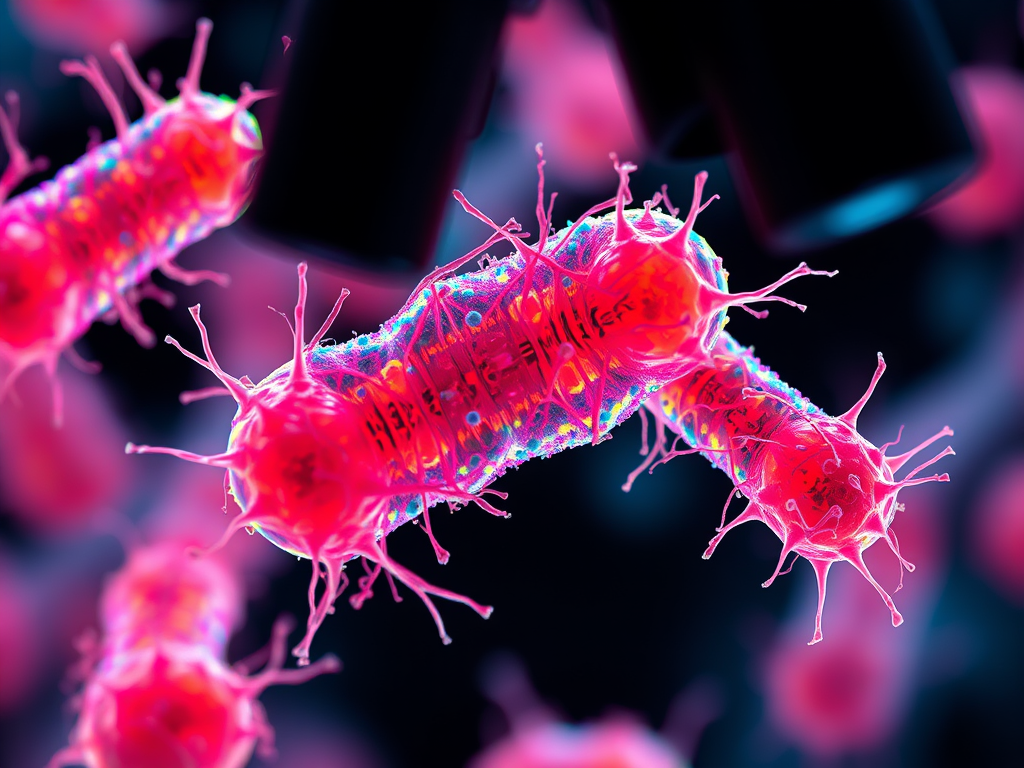
Kostas Konstantinidis challenged a long-standing scientific assumption by demonstrating that numerous bacteria, similar to plants and animals, are organized into species. It was widely believed by scientists that bacteria were unable to establish distinct species as a result of the vast size of their global populations and their unique genetic exchange mechanisms.
This notion is further challenged by recent research conducted by Konstantinidis and colleagues, which proposes that bacteria not only establish species but also sustain cohesive species through a mechanism that is somewhat “sexual.”
The next investigation for the researchers was the manner in which individual microorganisms within the same species preserve their cohesiveness. In other terms, how do bacteria maintain their similarity?
Bacteria and other microorganisms are believed to have evolved mainly through binary fission, which involves asexual reproduction, in addition to occasional genetic exchange. Konstantinidis and a multinational group of researchers tested their hypothesis regarding the emergence and continual existence of species by employing a novel bioinformatic technique for detecting gene transfer and a new wealth of whole genome data. They discovered that bacteria evolve and form species in a more “sexual” manner than was previously believed.
The team analyzed the complete genomes of microorganisms from two natural populations to investigate how microbial species uphold their own unique identities. They obtained and sequenced more than 100 strains of Salinibacter ruber, a salt-loving microbe from Spain. Subsequently, they examined a collection of Escherichia coli genomes that had been previously published and isolated from livestock farmlands in the United Kingdom. In order to find out the manner in which genes were being exchanged, they compared the genomes of microorganisms that were closely related.
They discovered that a process known as “homologous recombination” is crucial in maintaining the consistency of microbial species. Homologous recombination is the process by which organisms exchange DNA with one another and incorporate the new DNA into their genome by swapping their own similar DNA. They discovered that recombination happens frequently and arbitrarily throughout the entire genome of microorganisms rather than restricted to a few specific regions.
This may be profoundly distinct from sexual reproduction in animals, plants, fungi, and non-bacterial organisms, in which DNA is transferred during meiosis. However, the result in terms of species cohesion may be comparable. This continuous exchange of genetic material serves as a unifying force, ensuring that members of the same species exhibit similar characteristics.
The researchers also noted that members of the same species are much more inclined to swap DNA with one another compared to members of different species, which further contributes to the formation of distinct species boundaries.
This work addresses a significant, enduring issue in microbiology that is pertinent to numerous research fields. In other words, the methods for defining species and the underlying mechanisms that facilitate species cohesion.
This study has significant implications for a variety of disciplines, including environmental science, evolution, medicine, and public health. It provides valuable insights for the identification, modeling, and regulation of clinically or environmentally significant organisms. The research methodology that was implemented also serves as a molecular toolset for future epidemiological and micro-diversity studies.
Sources:
Roth E. Conrad et al. (2024). Microbial species and intraspecies units exist and are maintained by ecological cohesiveness coupled to high homologous recombination, Nature Communications. DOI: 10.1038/s41467-024-53787-0
https://phys.org/news/2025-01-secret-sex-bacteria-ideas-species.html
AI Disclosure Statement:
The Chromoscience uses AI-assisted tools to support the preparation and editing of science articles. Content is reviewed by the editor for clarity and consistency with the cited research before publication. Readers are encouraged to consult the original scientific publications for complete findings, methods, and limitations.



