
Advertisements
Advertisements
Related Topics

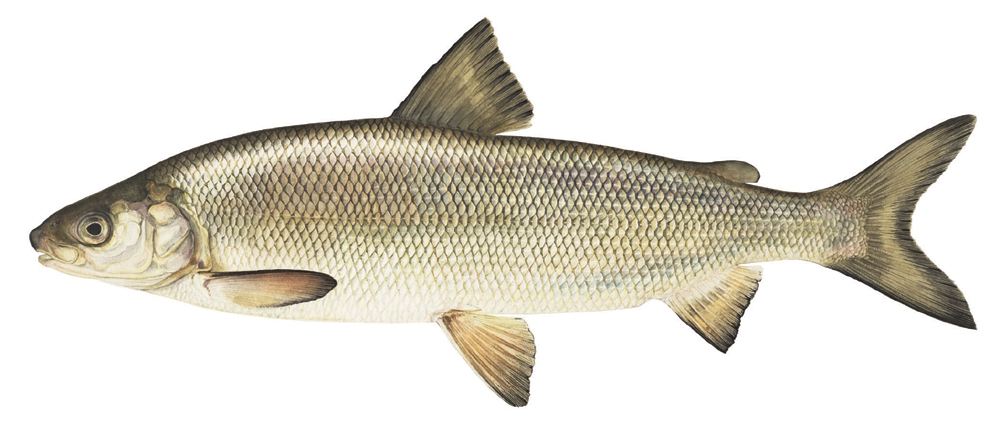
- Lake whitefish is a species of freshwater fish found in North American lakes including all of the Great Lakes.
- It is considered highly valuable in commercial fishing and occasionally used in sports fishing.
- Lake whitefish embryos usually develop during the winter season; thus, these embryos may be susceptible to changes in temperature.
- Researchers incubated whitefish embryos in different but constant temperatures and in varying temperatures.
- They discovered that hatchlings had a lower survival rate in 8 °C and varying temperatures than in 2 °C and 5 °C temperatures.
- Additionally, lake whitefish eggs tend to hatch earlier in 8 °C and varying temperatures compared to eggs in 2 °C and 5 °C temperatures.
- Researchers also found that hatchlings in 8 °C and varying temperatures were significantly smaller than in 2 °C and 5 °C temperatures.
- The study highlights the effect of temperature during embryonic development in lake whitefishes.
Source:
Eme, J., Mueller, C. A., Lee, A. H., Melendez, C., Manzon, R. G., Somers, C. M., Boreham, D. R., & Wilson, J. Y. (2018). Daily, repeating fluctuations in embryonic incubation temperature alter metabolism and growth of Lake whitefish (Coregonus clupeaformis). Comparative biochemistry and physiology. Part A, Molecular & integrative physiology, 226, 49–56. https://doi.org/10.1016/j.cbpa.2018.07.027
Advertisements
Advertisements
AI Disclosure Statement:
The Chromoscience uses AI-assisted tools to support the preparation and editing of science articles. Content is reviewed by the editor for clarity and consistency with the cited research before publication. Readers are encouraged to consult the original scientific publications for complete findings, methods, and limitations.