
Advertisements
Advertisements
Related Topics

- Colonization of land on the planet Earth is a critical part of the history of life.
- During this time, fungi played a variety of roles.
- Fungi contributed to continental weathering, biogeochemical cycles, and interaction with land organisms.
- Determining the time of when fungi colonized the land is crucial to understand the development of terrestrial ecosystem.
- Fungi may have separated around 1200 million years ago.
- However, it is unclear when fungi first moved to land.
- Pre-Devonian fossil record of fungi is very limited.
- There were a number of fungi fossils discovered but came from marine and estuarine environments, and did not show evidence that they came from terrestrial environment.
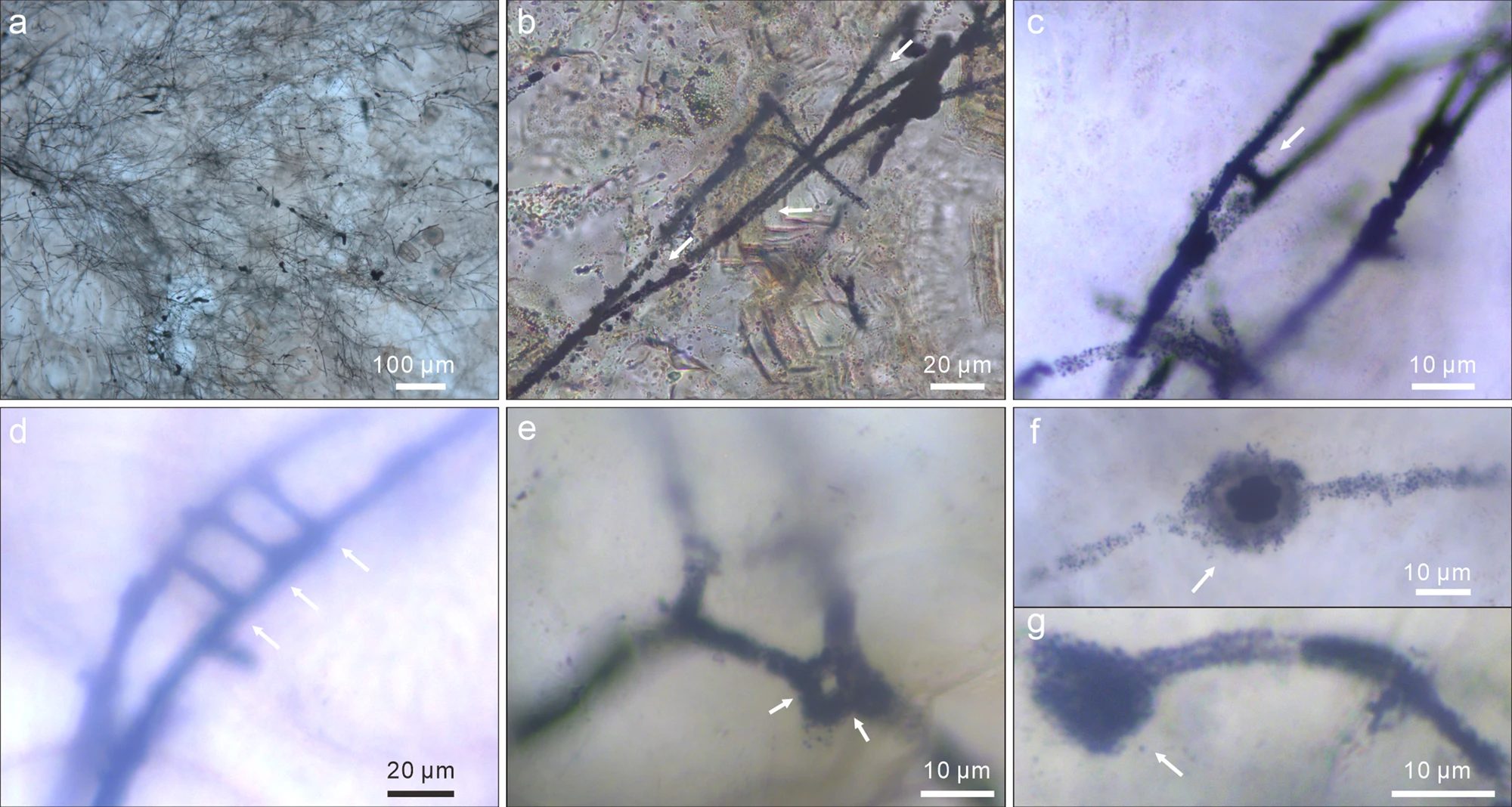
- Researchers discovered pyritized micro-fossils that looks like fungi in the basal Doushantuo Formation in China.
- Pyrites is a shiny yellow mineral consisting of iron disulphide and typically occurring as intersecting cubic crystals.[1]
- The Doushantuo Formation dates back around 635 million years ago.
- These possible fungi colonized and were preserved in rocks formed after the period when the surface of the Earth was almost entirely frozen.
- Researchers interpreted the organisms as eukaryotes and possible fungi.
- The data provides direct fossil evidence and contributing a more specific timeline of when fungi colonized the land.
Sources:
Gan, T., Luo, T., Pang, K. et al. Cryptic terrestrial fungus-like fossils of the early Ediacaran Period. Nat Commun 12, 641 (2021). https://doi.org/10.1038/s41467-021-20975-1
[1] https://www.lexico.com/definition/pyrites
Advertisements
Advertisements
AI Disclosure Statement:
The Chromoscience uses AI-assisted tools to support the preparation and editing of science articles. Content is reviewed by the editor for clarity and consistency with the cited research before publication. Readers are encouraged to consult the original scientific publications for complete findings, methods, and limitations.