
Related Topics

Although ribonucleic acid (RNA) molecules are most commonly recognized for their role in transporting the genetic information recorded in DNA to the protein manufacturers of a cell, it is important to note that these molecules are not merely a mediator in the process of protein development. In point of fact, there are RNA molecules that do not code for proteins at all. Instead, they perform a variety of other essential activities within the cell, such as controlling the expression of genes and providing a catalyst for chemical reactions. Nevertheless, the roles of a great number of non-coding RNAs continue to be a mystery.
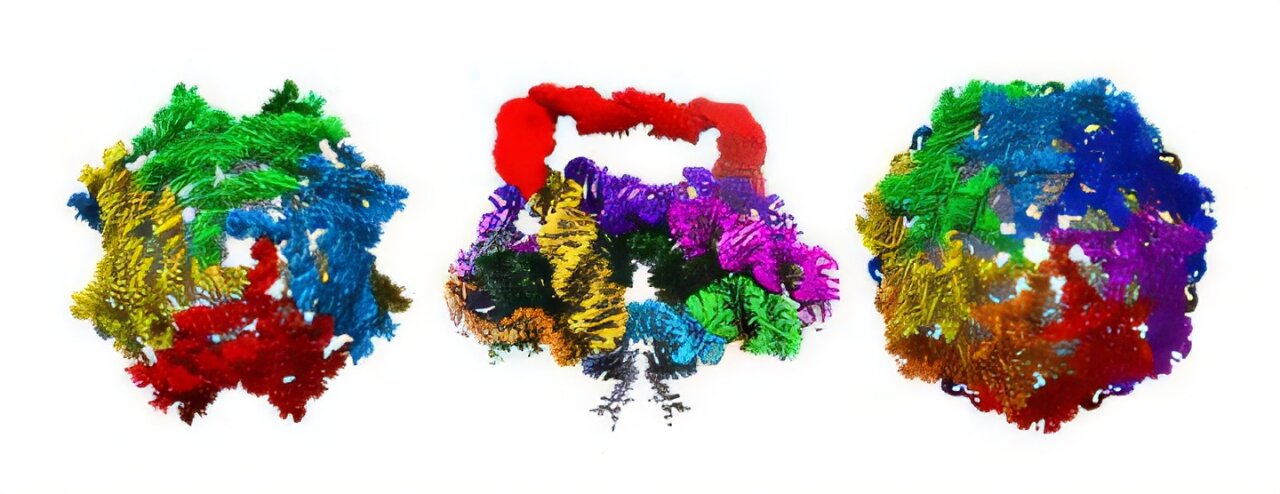
Now, researchers from Stanford University, the SLAC National Accelerator Laboratory of the Department of Energy, and the National Institutes of Health discovered unintentionally extravagant multistrand structures made entirely of RNA. These structures were reported in the journal Nature by the team. The researchers were looking for clues about the roles of three non-coding RNA molecules that were produced in large quantities in bacterial cells.
The researchers made the discovery that these RNAs fold into absolutely stunning symmetric structures even though they do not have any proteins or other molecules to support them. This is something that scientists have never observed in the natural world previously.
The present knowledge of how RNA assembles into big, complex structures has been improved as a result of this discovery, and the researchers believe that it may potentially inspire the building of comparable structures for use in biological or biotechnological applications.
Sources:
Rachael C. Kretsch et al. (2025). Naturally ornate RNA-only complexes revealed by cryo-EM, Nature. DOI: 10.1038/s41586-025-09073-0
Researchers discover large protein-free RNA structures. https://phys.org/news/2025-05-large-protein-free-rna.html
AI Disclosure Statement:
The Chromoscience uses AI-assisted tools to support the preparation and editing of science articles. Content is reviewed by the editor for clarity and consistency with the cited research before publication. Readers are encouraged to consult the original scientific publications for complete findings, methods, and limitations.