

Advertisements
Advertisements
Related Topics

- A promoter is a site on DNA to which the RNA polymerase can bind to initiate the transcription.[1]
- Chromatin accessibility of a promoter is necessary for the regulation of transcriptional activity.
- Histones are proteins that provide structural support to a chromosome.[2]
- Long DNA molecules are wrap around complexes of histone proteins so that the DNA will fit into the cell nucleus.[2]
- H2A.Z, a histone variant, has been shown to contribute to transcription regulation, however, its role is not well understood.
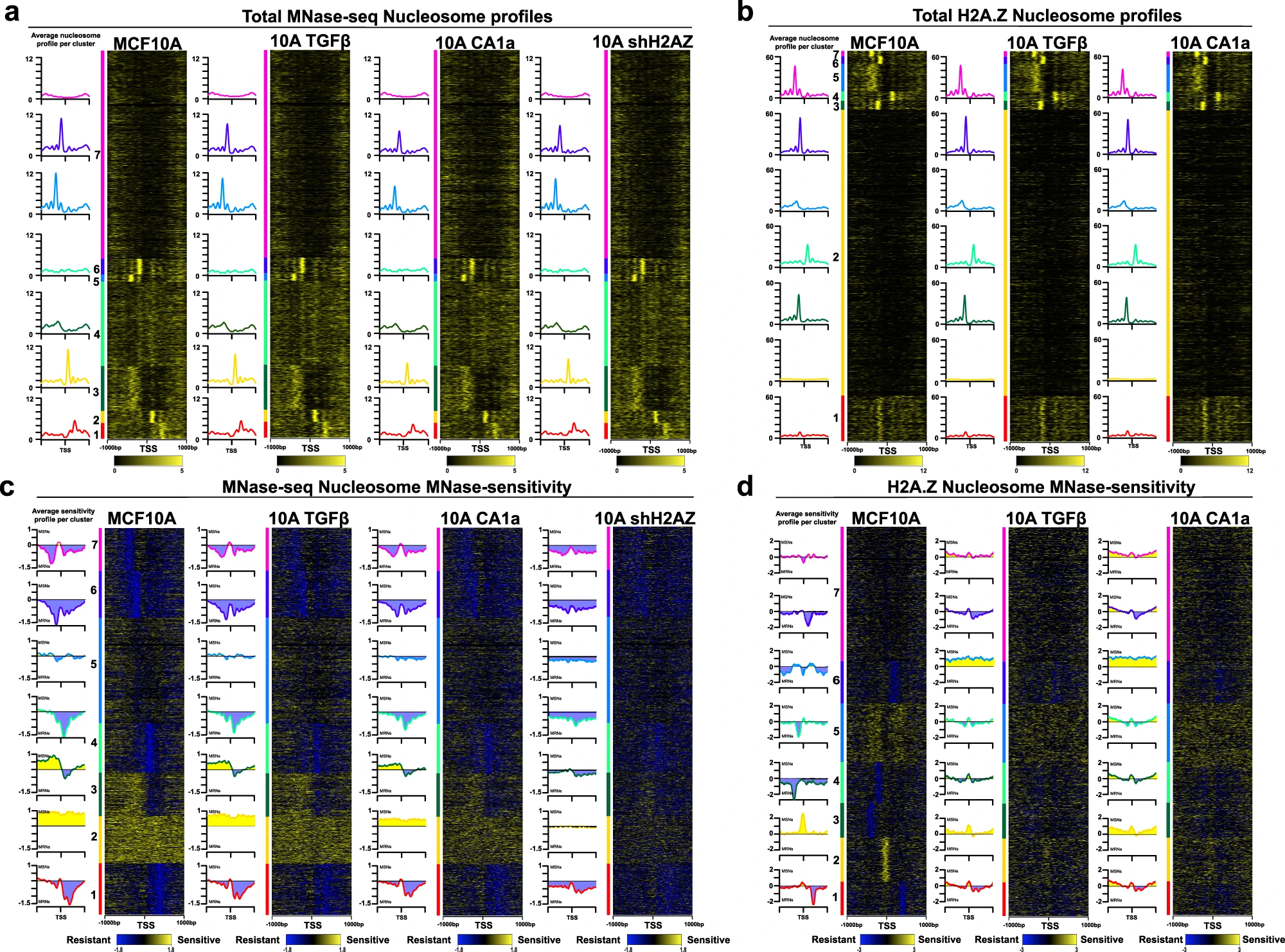
- Researchers prepared maps of the position and accessibility of nucleosomes that contain the H2A.Z variant for all human RNA polymerase II promoters in epithelial, mesenchymal, and isogenic cancer cell lines.
- The team is led by Lauren Cole of Florida State University in Tallahassee, Florida.
- A nucleosome is a structural unit of a chromosome that contains a length of DNA coiled around a core of histones.[3]
- The study revealed that many different types of active and inactive promoter structures are observed that differ in their nucleosome organization and sensitivity to MNase digestion.
- MNase is an enzyme that digests DNA in regions that are not stably bound by proteins.[4]
- Normally, DNA wrapped around the histones is protected from MNase digestion.[4]
- Key aspects of an active chromatin structure include positioned H2A.Z MNase resistant nucleosomes before or after the transcription start site, and an MNase sensitive nucleosome at the transcription start site.
- Additionally, the removal of H2A.Z leads to a significant increase in the accessibility of transcription factor binding sites.
- Overall, the data suggest that the variant H2A.Z has numerous and distinct roles in gene expression regulation.
Related Video:
Sources:
Cole, L., Kurscheid, S., Nekrasov, M. et al. Multiple roles of H2A.Z in regulating promoter chromatin architecture in human cells. Nat Commun 12, 2524 (2021). https://doi.org/10.1038/s41467-021-22688-x
[1] https://www.medicinenet.com/promoter/definition.htm
[2] https://www.genome.gov/genetics-glossary/histone
[3] Oxford Dictionary. https://languages.oup.com
[4] https://www.sciencedirect.com/topics/neuroscience/micrococcal-nuclease
Advertisements
Advertisements
AI Disclosure Statement:
The Chromoscience uses AI-assisted tools to support the preparation and editing of science articles. Content is reviewed by the editor for clarity and consistency with the cited research before publication. Readers are encouraged to consult the original scientific publications for complete findings, methods, and limitations.



