
Related Topics

Once considered the cell’s trash can, the midbody remnant contains genetic material that may be responsible for cancer progression.
Ahna Skop, a University of Wisconsin–Madison genetics professor, says many people are surprised that mitosis produces more than two daughter cells.
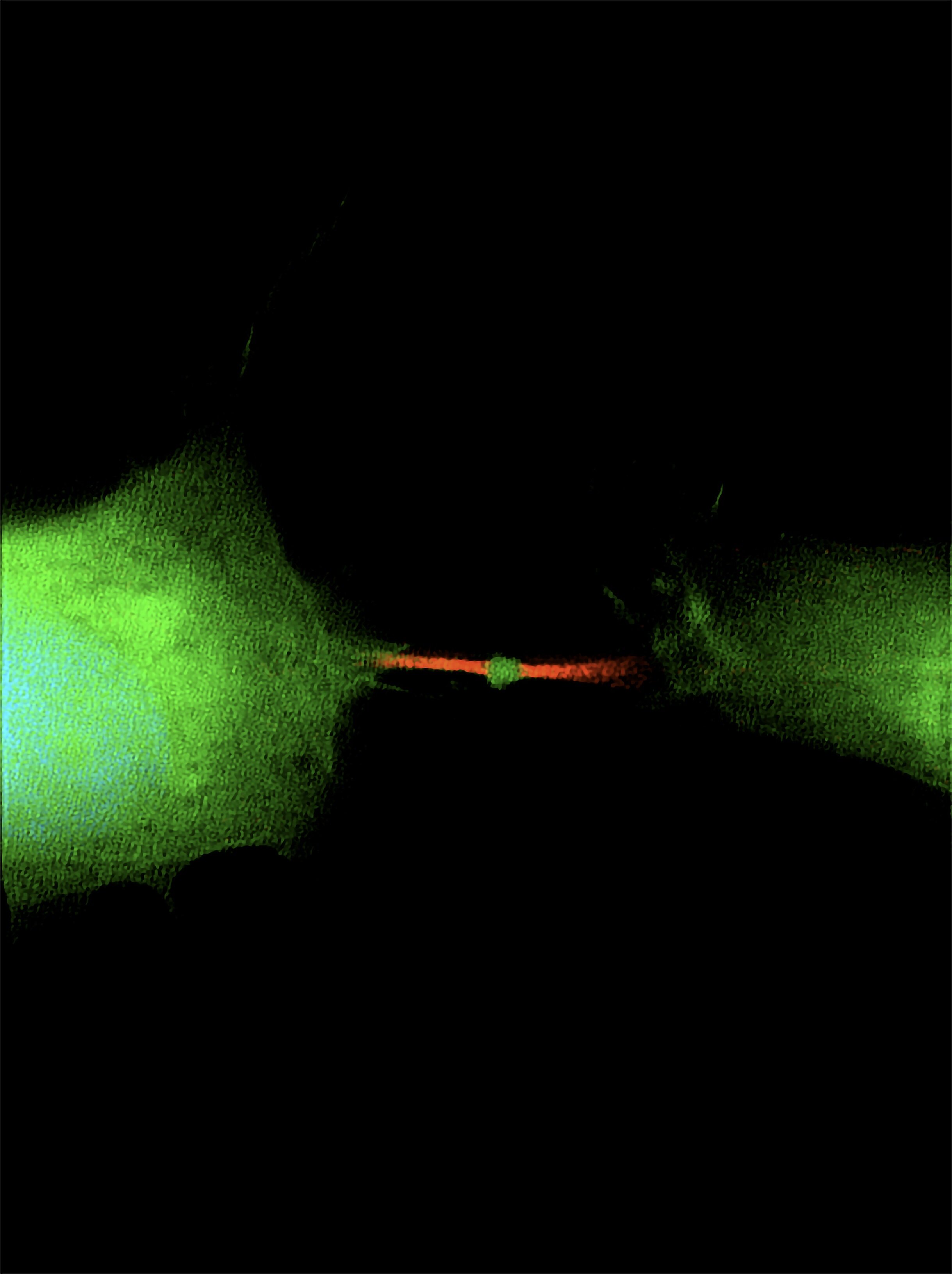
According to the researchers, a single cell divides into three parts: two daughter cells and one midbody remnant, a new communicating organelle. Surprisingly, the midbody is packed with genetic material, RNA, that doesn’t have much to do with cell division, but probably functions in cell signaling.
Skop’s lab and colleagues from the Pasteur Institute in Paris, Harvard Medical School, Boston University, and the University of Utah examined midbodies, which form between daughter cells during division, and their interactions in a study published today in Developmental Cell. The midbody appears to carry malignancy throughout the body.
People believed the midbody was a part where things died or reused after cell division. Some people’s trash is another’s treasure. A midbody is a cell’s communication packet.
To learn more about the midbody’s role in cell signaling and proliferation, Skop and her colleagues wanted to examine the remnants.
The researchers detected RNA—a working copy of DNA required to build cell proteins—and the cellular machinery to turn it into proteins in midbodies. RNA in midbodies acts as blueprints for proteins involved in pluripotency (the ability to develop into any of the body’s various cell types) and oncogenesis (the development of malignant tumors).
The midbody remnant is very small and micron in size. Despite the small size, it has all it needs to sustain dividing cell information. It can travel from mitosis, enter the circulation, and land on another cell.
Most daughter cells absorb midbody remnants, but those that land on remote areas, like a lunar lander, may be absorbed by a third cell. A remote cell that utilizes the midbody may confuse the contained RNA for its own blueprints.
Previous research found that cancer cells are more likely than stem cells to have absorbed a midbody and its fate-altering payload. Stem cells, which give rise to new cells and are essential for their pluripotency, discharge several midbodies, possibly to maintain their pluripotency.
Midbody RNA may be used to deliver medications to cancer cells or stop their division in future study.
The researchers found that the midbody and midbody remnant are loaded with RNA by the Arc gene. Arc, inherited from an ancient virus, helps brain cells form memories.
The loss of Arc result in the loss of RNA in the midbody and a loss of the RNA information from getting to recipient cells. The researchers suggest this memory gene vital for all cells to send RNA information.
Sources:
Sungjin Park et al. (2023). The mammalian midbody and midbody remnant are assembly sites for RNA and localized translation, Developmental Cell. DOI: 10.1016/j.devcel.2023.07.009
https://phys.org/news/2023-10-remnant-cell-division-responsible-cancer.html
AI Disclosure Statement:
The Chromoscience uses AI-assisted tools to support the preparation and editing of science articles. Content is reviewed by the editor for clarity and consistency with the cited research before publication. Readers are encouraged to consult the original scientific publications for complete findings, methods, and limitations.
Keywords: cancer progression, cancer development, cancer detection