
Related Topics

Paleontology is moving away from Jurassic Park’s Hollywood-inspired dinosaur image with each new discovery. One of the biggest changes is how we see them. Many dinosaurs were coated with feathers like present-day birds, not tough-skinned reptiles as seen on film.
According to new fossilized dinosaur bones, which contained voice box pieces, researchers believe a group of herbivorous, non-avian dinosaurs tweeted like birds instead of roaring and growling.
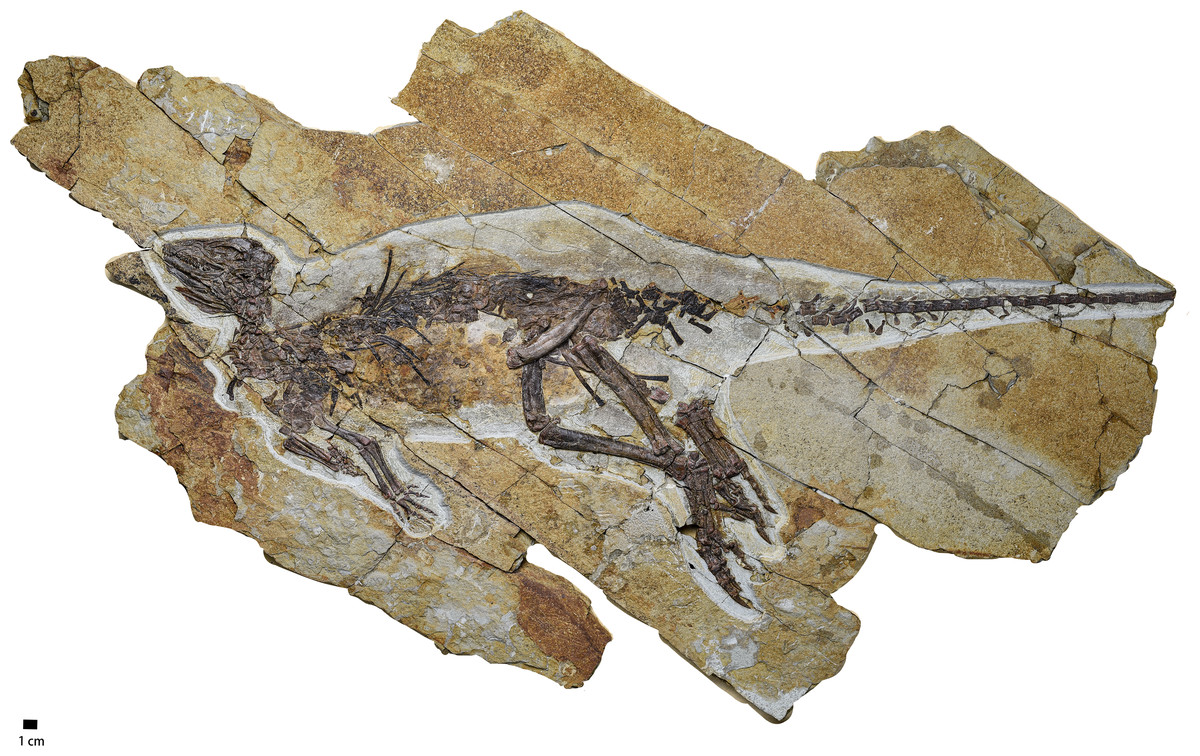
A 2-foot-long new dinosaur species, Pulaosaurus qinglong, named after “Pulao,” a fabled Chinese dragon noted for its loud roar, was found by Chinese researchers. The new species is a member of Neornithischia, a subclass of Ornithischia which contains herbivorous dinosaurs with bird-like pelvis features.
The Yanliao Biota, a globally recognized dinosaur fossil site in northern China, provided the earliest neornithischian dinosaur fossils from the Middle to Late Jurassic period, 165–150 million years ago.
Ornithischians were neglected in Yanliao Biota and Asian research, which concentrated on small theropods as well as early birds. Researchers struggled to trace early Ornithischia diversification due to an insufficient fossil record.
In Hebei Province, northern China, investigators found a beautifully preserved young Pulaosaurus qinglong specimen in the Upper Jurassic Tiaojishan Formation. An almost complete skeleton was found including vertebrae, limbs, pelvis, larynx bones, and unusual soft tissue components.
The investigators utilized phylogenetic analysis to learn about Pulaosaurus qinglong’s evolutionary family tree. Results showed it was one of the earliest neornithischian dinosaurs found. It is also the second dinosaur possessing fossilized larynx bones, allowing researchers to study sound generation and vocalization. Pulaosaurus’s larynx had extended, leaf-shaped cartilage components like present-day birds’, implying bird-like vocal capability.
Scientists were also intrigued about the dinosaur diets. The intestinal cavity contained little, spherical stones and small imprints that may be plant seeds or other plant materials. Pulaosaurus’ teeth, jaw, and tongue showed they liked soft plant food.
This new species sheds light on the Yanliao Biota’s biodiversity and contributes to our knowledge of early-diverging neornithischian dinosaurs.
Sources:
Yunfeng Yang et al. (2025). A new neornithischian dinosaur from the Upper Jurassic Tiaojishan Formation of northern China, PeerJ. DOI: 10.7717/peerj.19664
A new dinosaur species discovered in China didn’t roar, it chirped like a bird. https://phys.org/news/2025-07-dinosaur-species-china-didnt-roar.html
AI Disclosure Statement:
The Chromoscience uses AI-assisted tools to support the preparation and editing of science articles. Content is reviewed by the editor for clarity and consistency with the cited research before publication. Readers are encouraged to consult the original scientific publications for complete findings, methods, and limitations.