
Related Topics

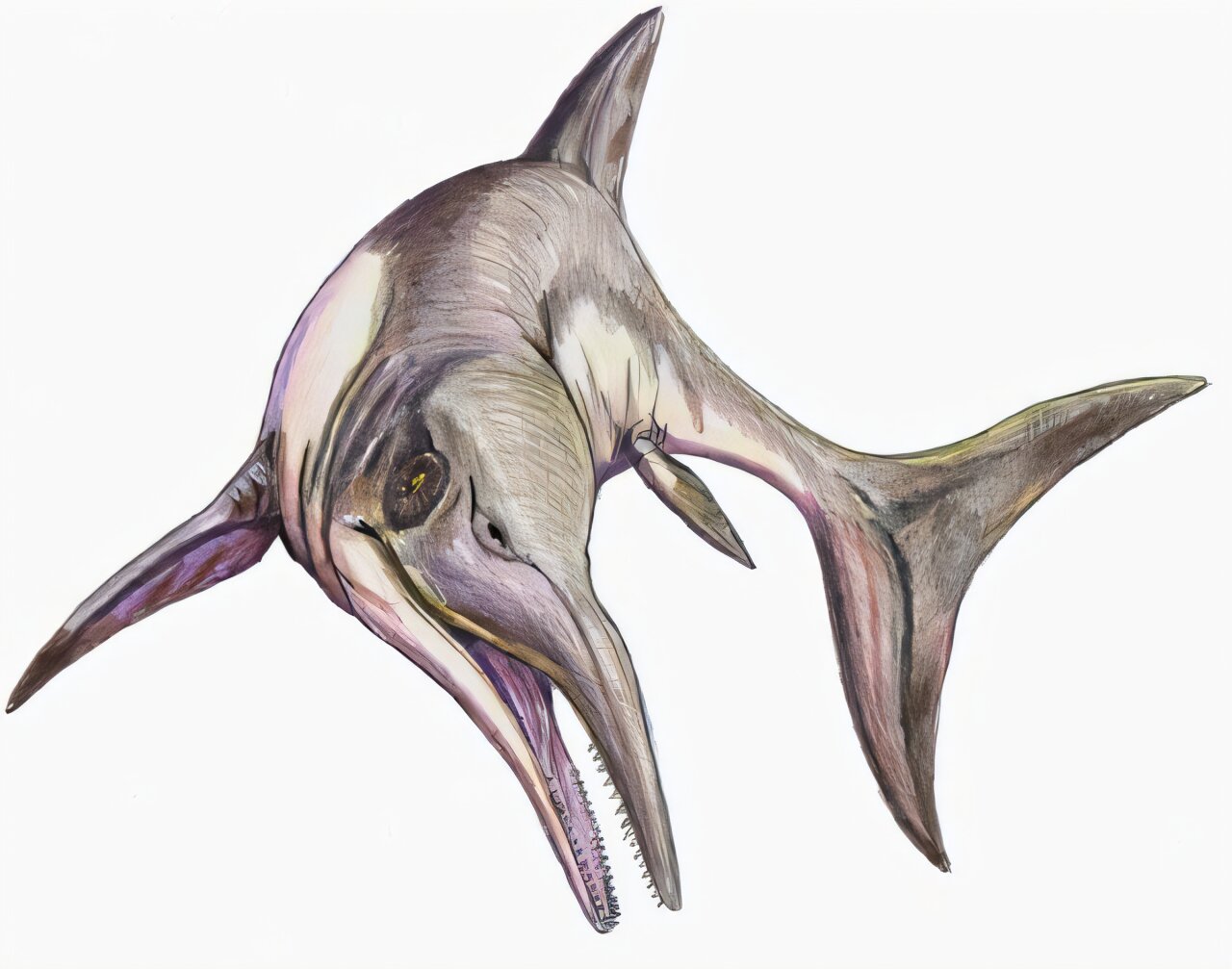
Ichthyosaurs were marine reptiles that lived during the dinosaur era. They evolved separately some 250 million years ago, possibly from a crocodile-like ancestor.
Eventually, they became extinct roughly 94 million years ago.
Paleontologist James Crampton uncovered an incomplete ichthyosaur skeleton in 2010 while working at Coverham Station in the Clarence Valley of inland North Canterbury. This specimen is from the Cenomanian stage of the Late Cretaceous epoch, which occurred just under 100 million years ago.
The skeleton was encased in hard concretion and transported from Coverham to GNS Science, where it will be kept and recorded until 2021. It was classified as an ichthyosaur because to its distinctive hourglass-shaped vertebrae.
The research, published in the Journal of Vertebrate Paleontology, gives new information on the specimen, which is more detailed than any other documented ichthyosaur skeleton from New Zealand.
Prior to this find, the only Cretaceous ichthyosaur remains discovered in New Zealand were a little portion of a jaw and a few vertebrae from various individuals on the North Island. This discovery contributed substantially to the understanding of these dolphin-like reptiles in Aotearoa New Zealand.
The ichthyosaurs of New Zealand have remained understudied due to a scarcity of well-preserved specimens. This fossil is expected to shift the narrative.
Al Mannering, an accomplished fossilist, carefully processed this discovery so that it could be examined with a medical CT scanner to photograph the bones that were too challenging to prepare.
Each bone was then displayed in 3D to investigate its morphology using a method known as virtual preparation. The fossils included a portion of the skull’s base, sections of the shoulder and front flipper, a full left pelvis, and the majority of a hind flipper. Numerous vertebrae and flipper bones were also found in the concretion.
This discovery is very interesting because the specimen is around 98 million years old. This is around four million years before the final disappearance of ichthyosaurs, making it one of the most recent semi-complete ichthyosaur skeletons recorded.
The fossil is crucial to understanding ichthyosaur diversity in New Zealand. Because most specimens are fragmented, these ancient reptiles have not received as much attention as those in the northern hemisphere.
The pelvis is likewise very seldom preserved in Cretaceous ichthyosaurs, particularly so close to their extinction. This provides much-needed information about their appearance and differences from other species around the world. We can see how it differed from other species’ hip bones.
Sources:
George R. A. Young et al. (2024). A platypterygiid ichthyosaur from the Cenomanian of central New Zealand, Journal of Vertebrate Paleontology. DOI: 10.1080/02724634.2024.2408391
https://phys.org/news/2025-01-discovery-rare-fossil-zealand-extinct.html
AI Disclosure Statement:
The Chromoscience uses AI-assisted tools to support the preparation and editing of science articles. Content is reviewed by the editor for clarity and consistency with the cited research before publication. Readers are encouraged to consult the original scientific publications for complete findings, methods, and limitations.