

Advertisements
Advertisements
Related Topics

- Animal movement can be an important factor in determining ecological niche.
- Scientists assumed that animals reduce locomotor energy usage by doing gait movement tuned to the natural frequencies of related body parts.
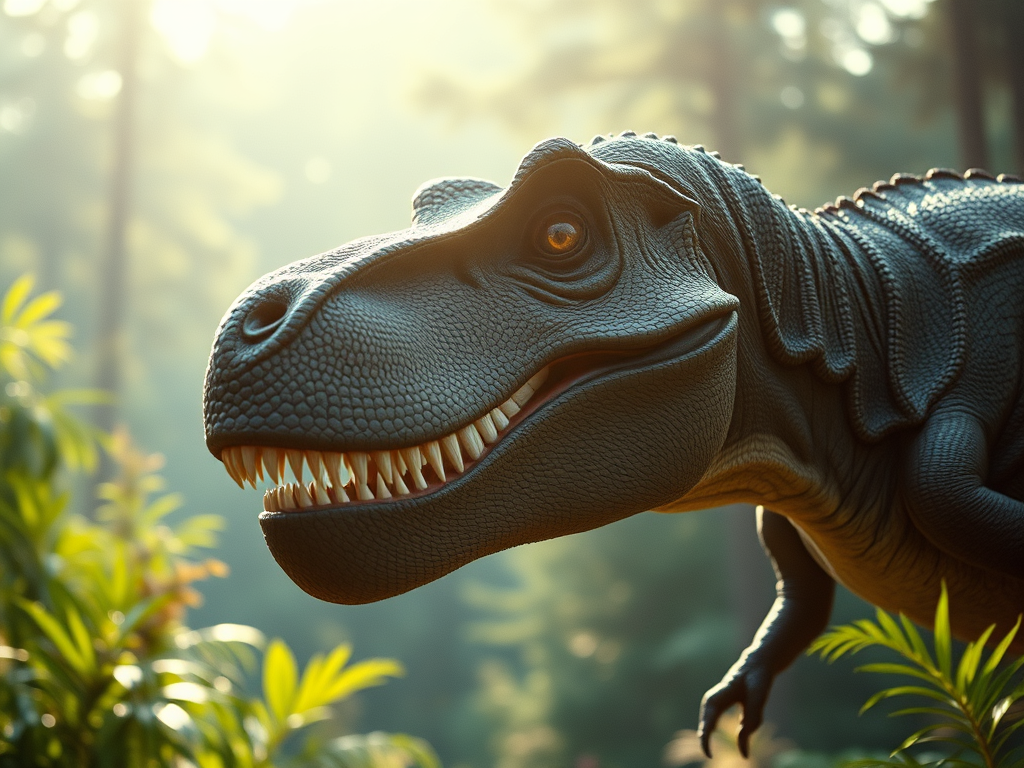
- Researchers demonstrate that this allows them to estimate the preferred step frequency and walking speed of T-rex.
- The tail of dinosaur that walks in two legs was actively involve in walking.
- However, the tail was suspended passively by the caudal interspinous ligaments which allowed for energy storage through elasticity.
- To maintain high elastic energy storage, walking steps and natural frequencies would have to be complemented.
- Researchers determined the tail natural frequency to be 0.66 per second and the walking speed to be 1.28 meters per second.
- The walking speed in this study was found to be lower than earlier estimations for large theropods.
Sources:
van Bijlert Pasha A., van Soest A. J. ‘Knoek’ and Schulp Anne S. (2021). Natural Frequency Method: estimating the preferred walking speed of Tyrannosaurus rex based on tail natural frequencyR. Soc. open sci.8201441201441
http://doi.org/10.1098/rsos.201441
Advertisements
Advertisements
AI Disclosure Statement:
The Chromoscience uses AI-assisted tools to support the preparation and editing of science articles. Content is reviewed by the editor for clarity and consistency with the cited research before publication. Readers are encouraged to consult the original scientific publications for complete findings, methods, and limitations.



