
Related Topics

An international study partnership discovered a new mechanism for the crosstalk between microtubules and the actin cytoskeleton during cell division, as well as unique properties of the yet-unidentified protein FAM110A.
These groundbreaking findings considerably improve our understanding of a fundamental process involved in the occurrence of developmental abnormalities and cancers. The work was published in the journal Proceedings of the National Academy of Sciences.
Precise division of genetic material into daughter cells is required in all tissues of our bodies. To avoid developmental defects, this process must be strictly regulated in both place and time. It has been understood for years that chromosomes adhere to a bipolar structure called the mitotic spindle, which is made up of microtubules.
Mitosis is the mechanism by which a cell splits its nucleus and genetic material to form two identical daughter cells with an equal number of chromosomes. As it moves forward, the associated chromosomes are dragged along the microtubule railways to the daughter cells.
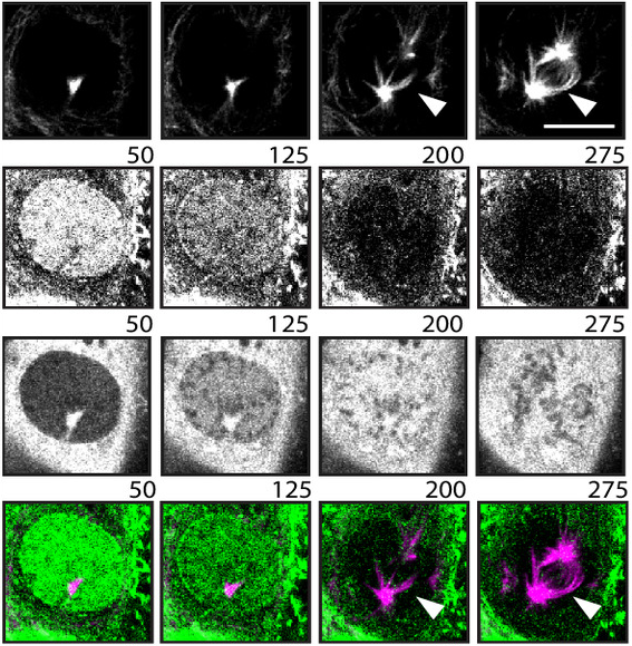
Until recently, researchers thought that actin filaments were only required for the last stage of daughter cell separation, and the involvement of the actin cytoskeleton in mitosis has long been ignored. In their most recent study, the researchers show that the previously unknown protein FAM110A has unique features that allow it to bind actin and microtubules at different ends, specifically at the poles of mitotic spindles.
Microscopic investigation revealed the production of extremely active actin filaments near the spindle poles, which precede and direct the growth of spindle microtubules.
FAM110A deficiency prevented the normal production of spindle actin, resulting in severe chromosomal segregation defects. As a result, the study identifies an important molecular link between the two principal cytoskeletal networks during mitosis. This discovery opens the door to further research into how FAM110A and other proteins found in human cells prevent genomic instability and cancer development.
Sources:
Cecilia Aquino-Perez et al. (2024). FAM110A promotes mitotic spindle formation by linking microtubules with actin cytoskeleton, Proceedings of the National Academy of Sciences. DOI: 10.1073/pnas.2321647121
https://phys.org/news/2024-07-unique-characteristics-previously-unexplored-protein.html
AI Disclosure Statement:
The Chromoscience uses AI-assisted tools to support the preparation and editing of science articles. Content is reviewed by the editor for clarity and consistency with the cited research before publication. Readers are encouraged to consult the original scientific publications for complete findings, methods, and limitations.