

Related Topics

How does it happen? is a fundamental life question. In human development, how do cells form skin, muscles, and bones? How do brains, fingers, and spines form?
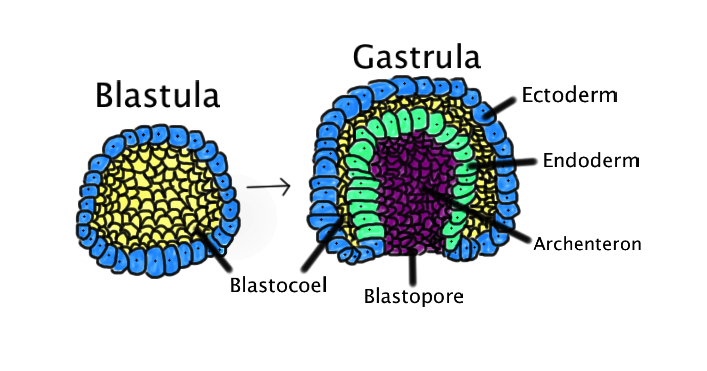
Gastrulation—the stage at which embryo cells transform from a single layer to a multidimensional structure with a major body axis—is one area of scientific study that may address such issues. Around 14 days after conception, humans gastrulate.
Instead of studying human embryos at this stage, researchers at the University of California San Diego, the University of Dundee (UK), and Harvard University studied chick embryo gastrulation, which is similar to human embryos.
The researchers created a mathematical model using Dundee University biologists’ input. The model accurately predicted gastrulation flows—the motion of tens of thousands of cells in the chick embryo—observed under a microscope. A self-organizing mathematical model has never before reproduced these dynamics in chick embryos.
Unexpectedly, the model created cellular flows that were not seen in the chick but in the frog and fish.
Biology collaborators replicated the model’s perturbations on the chick embryo in the lab to verify these conclusions. These modified chick embryos appeared to have gastrulation flows similar to fish and frogs.
The findings show that vertebrate species may have evolved the same fundamental mechanisms driving multicellular self-organization.
Fish, frogs and chicks all thrive in different conditions, so over a period of time, the evolutionary force may have altered the parameters and the original conditions of embryo development. However, some of the self-organizing fundamental principles, at least in the initial phase of gastrulation, may be identical in all three.
The team are researching different mechanisms that cause embryo-scale self-organizing patterns. They anticipate this discovery will improve biomaterials design and regenerative therapy to extend human life.
Sources:
Mattia Serra et al. (2023). A mechanochemical model recapitulates distinct vertebrate gastrulation modes, Science Advances. DOI: 10.1126/sciadv.adh8152
https://phys.org/news/2023-12-mathematical-evolution-chickens-fish-frogs.html
AI Disclosure Statement:
The Chromoscience uses AI-assisted tools to support the preparation and editing of science articles. Content is reviewed by the editor for clarity and consistency with the cited research before publication. Readers are encouraged to consult the original scientific publications for complete findings, methods, and limitations.



