

Advertisements
Advertisements
Related Topics

- Human stem cells introduced to cells from other species may be a necessary alternative to assess its ability to differentiate inside a living organism.
- This process might establish a promising technique for various regenerative medicine applications which includes generating organs and tissues for transplantation.
- In mouse and pig embryonic studies, human pluripotent stem cells do not strongly contribute to chimera formation in species that are distant from humans.
- Chimera is an individual organism or molecule derived from 2 or more species.[1]
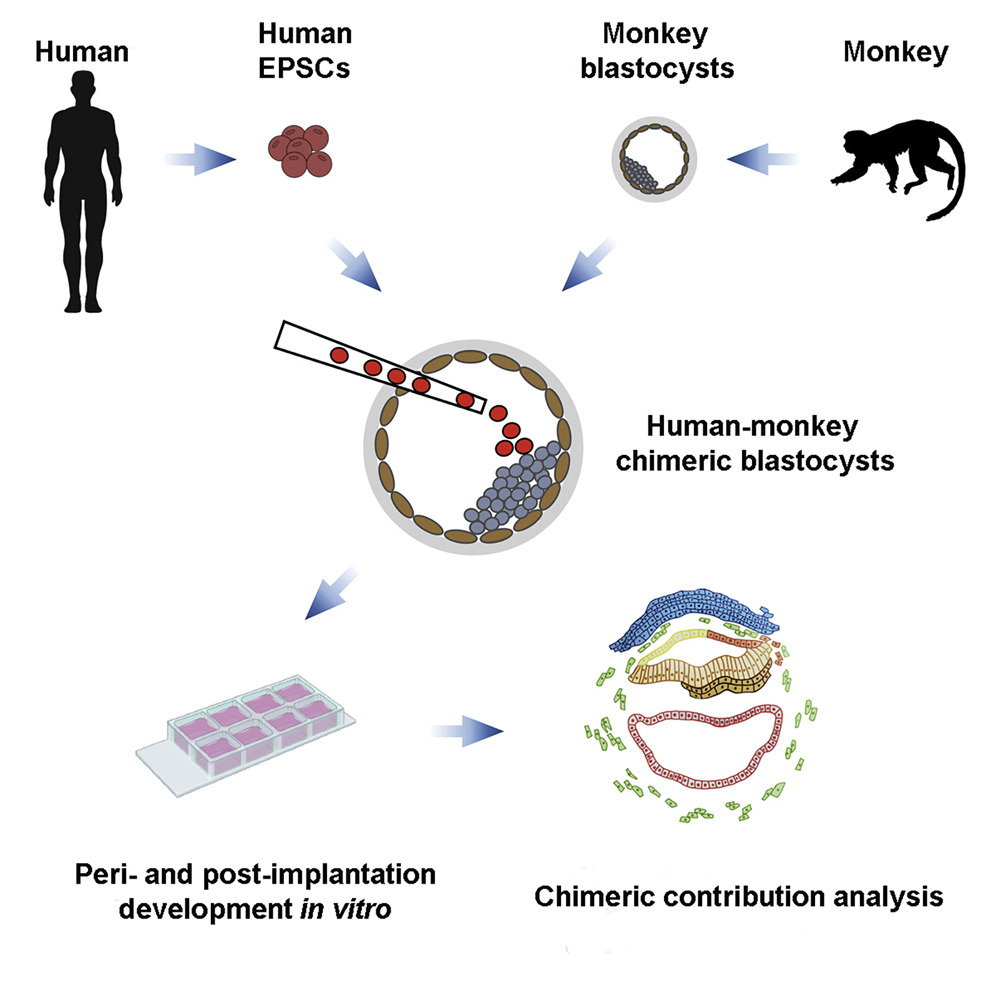
- This research studied the chimeric formation of human stem cells when introduced into monkey embryos.
- The study comprised researchers from Gene Expression Laboratory in California, State Key Laboratory of Primate Biomedical Research in China, and Universidad Católica San Antonio de Murcia in Spain.
- Researchers discovered that the human stem cells were able to survive, proliferate, and generate implantation cell lineages inside the monkey embryos.
- Researchers also discovered that the human stem cells and monkey embryonic cells seem to communicate with each other that can lead to the unique development of chimeric embryos.
- The findings may help our understanding of human development and primate evolution and develop techniques to improve human chimerism in evolutionarily distant species.
Sources:
https://www.cell.com/cell/fulltext/S0092-8674(21)00305-6
[1] https://medical-dictionary.thefreedictionary.com/chimera
Advertisements
Advertisements
AI Disclosure Statement:
The Chromoscience uses AI-assisted tools to support the preparation and editing of science articles. Content is reviewed by the editor for clarity and consistency with the cited research before publication. Readers are encouraged to consult the original scientific publications for complete findings, methods, and limitations.



