
Related Topics

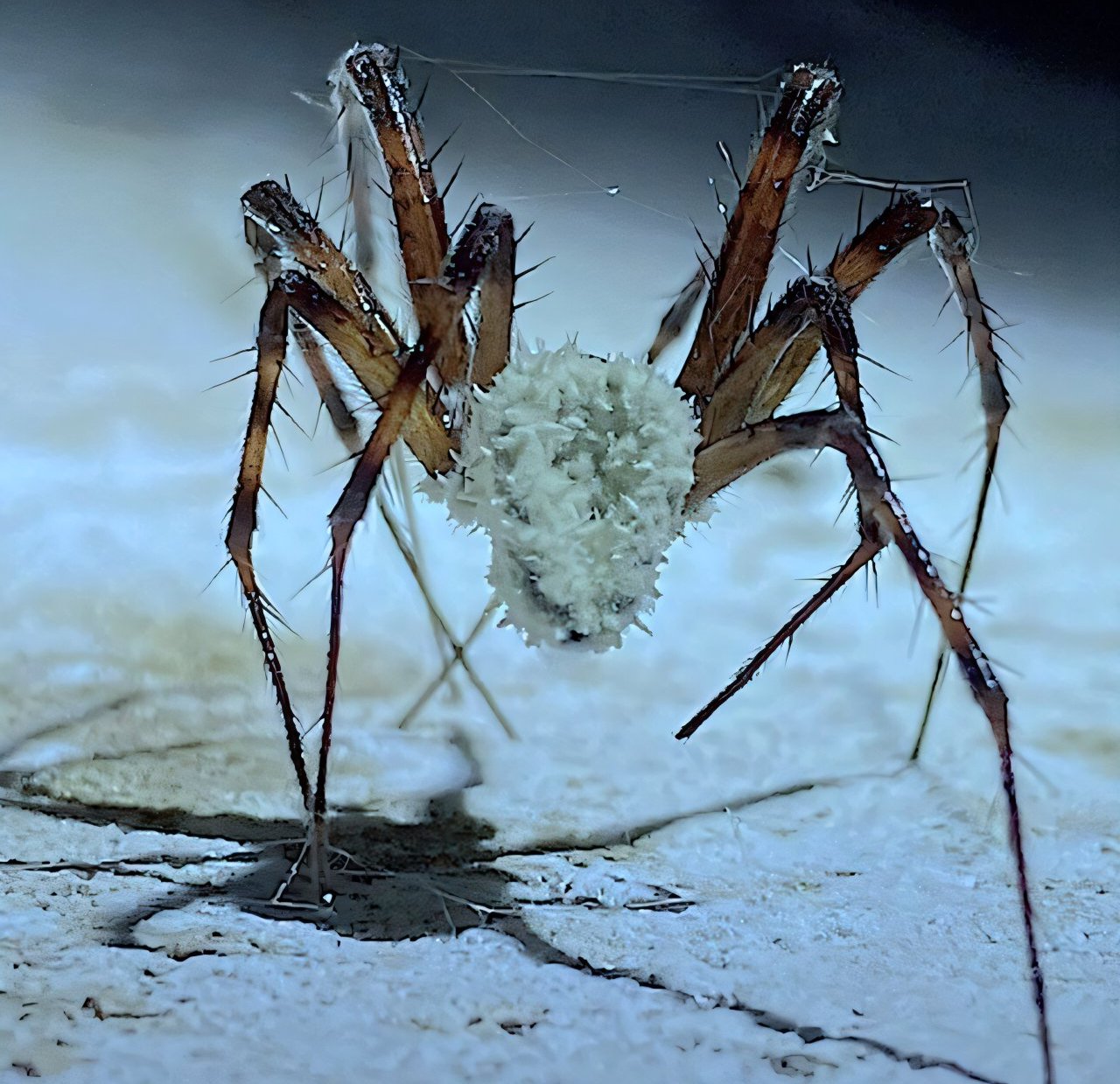
During the filming of the BBC Winterwatch series in Northern Ireland, Dr. Harry Evans, Emeritus Fellow at CAB International, initiated a study to determine the identity of a fungus discovered on an arachnid. The study was conducted in collaboration with scientists from the Natural History Museum of Denmark and the Royal Botanical Gardens Kew. The article is published in the journal Fungal Systematics and Evolution.
The fungus was identified as a new species and named after Sir David Attenborough, a pioneer of BBC natural history programs who, in his capacity as controller of BBC 2, played a role in the development of the Natural History Unit. This, in turn, led to the current nature series, during which the newly described species was initially identified, based on both structural and molecular evidence.
The orb-weaving cave spider, Metellina merianae (Tetragnathidae: Araneae), was identified as the spider host. Subsequently, additional specimens of the new species, Gibellula attenboroughii, were discovered in cave systems in both Northern Ireland and the Republic of Ireland, as well as on a similar spider, Meta menardi, which occupied distinct ecological niches within the caves. This discovery was made possible by the assistance of a local speleologist.
The infected spiders were all positioned on the roof or walls of the caves, similar to the type specimen, which was originally located on the ceiling of a gunpowder store. The behavior of ants infected by fungi of the genus Ophiocordyceps, which was previously reported from the Atlantic rainforest of Brazil, was essentially mirrored by these normally reclusive spiders, who migrated to perish in exposed situations after leaving their lairs or webs.
The manipulation of the host to facilitate the dispersal of the fungal spores resulted in the description of “zombie-ant fungi” and the publication of numerous zombie-fungus-themed novels, as well as a popular video game and the television series, The Last of Us. Since then, cultures of zombie-ant fungi from the genus Ophiocordyceps have been found to contain metabolites that alter behavior, including dopamine.
The researchers also employed historical herbarium records and research in literature to uncover a concealed diversity within the genus Gibellula in the British Isles, as well as evidence of extensive disease epidemics on spiders in Norfolk and Wales. The conclusion reached was that their role in spider-population patterns deserves further study, as does the metabolites they create which allow them to take advantage of such a highly specific ecological space.
Sources:
H.C. Evans et al. (2025). The araneopathogenic genus Gibellula (Cordycipitaceae: Hypocreales) in the British Isles, including a new zombie species on orb-weaving cave spiders (Metainae: Tetragnathidae), Fungal Systematics and Evolution. DOI: 10.3114/fuse.2025.15.07
https://phys.org/news/2025-01-newly-fungal-species-zombies-cave.html
AI Disclosure Statement:
The Chromoscience uses AI-assisted tools to support the preparation and editing of science articles. Content is reviewed by the editor for clarity and consistency with the cited research before publication. Readers are encouraged to consult the original scientific publications for complete findings, methods, and limitations.