
Related Topics

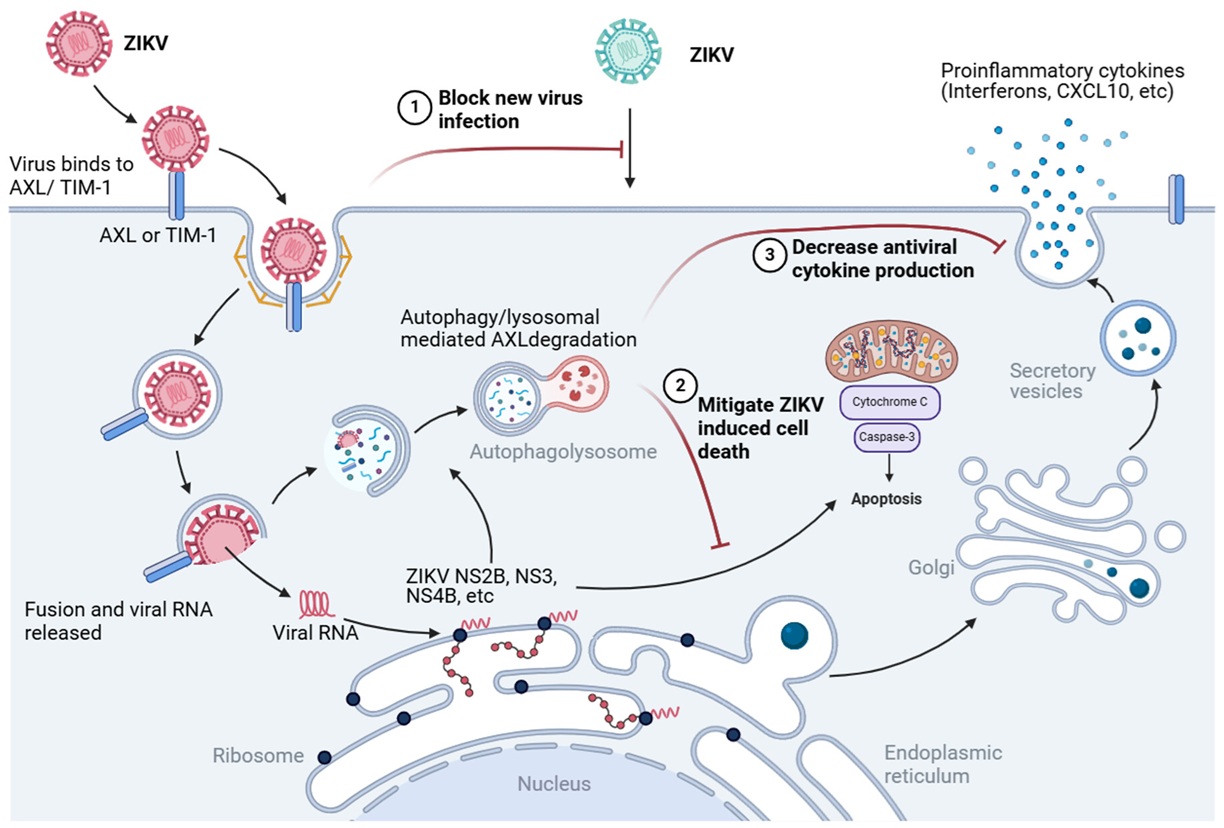
Zika exploits the host cells’ “self-care” mechanism that clears out unnecessary molecules in order to disable the host proteins that the virus utilized to get inside those cells in the initial stage. This reveals the molecular secret to the infectious success of the Zika virus.
Although these cell surface proteins are essential for the entry of viruses, they also play a role in the development of an antiviral process during the immune response. In order to prevent this from occurring, the virus manipulates a mechanism that cells employ to maintain their own health in order to reduce the activity of the proteins. This makes it possible for the virus to infect cells without limitations.
Although other viruses, such as HIV, have been shown to silence host receptors that allow them to enter cells, Zika is unique in that it possesses at least three of proteins that are capable of doing the job.
It is incredible that not just one but numerous Zika proteins are capable of doing this. This is the most fascinating aspect of this situation. The researchers investigated two different strains of the Zika virus and looked at three different cell types that were physiologically significant. Within all three cell types, they were able to observe the downregulation that occurred with both strains. It appears that this is a significant process.
Sources:
Jingyou Yu et al. (2025). Autophagy-mediated downregulation of AXL and TIM-1 promotes sustained Zika virus infection, Proceedings of the National Academy of Sciences. DOI: 10.1073/pnas.2427241122
Zika virus uses cells’ ‘self-care’ system to turn against host. https://phys.org/news/2025-05-zika-virus-cells-host.html
AI Disclosure Statement:
The Chromoscience uses AI-assisted tools to support the preparation and editing of science articles. Content is reviewed by the editor for clarity and consistency with the cited research before publication. Readers are encouraged to consult the original scientific publications for complete findings, methods, and limitations.