

Related Topics

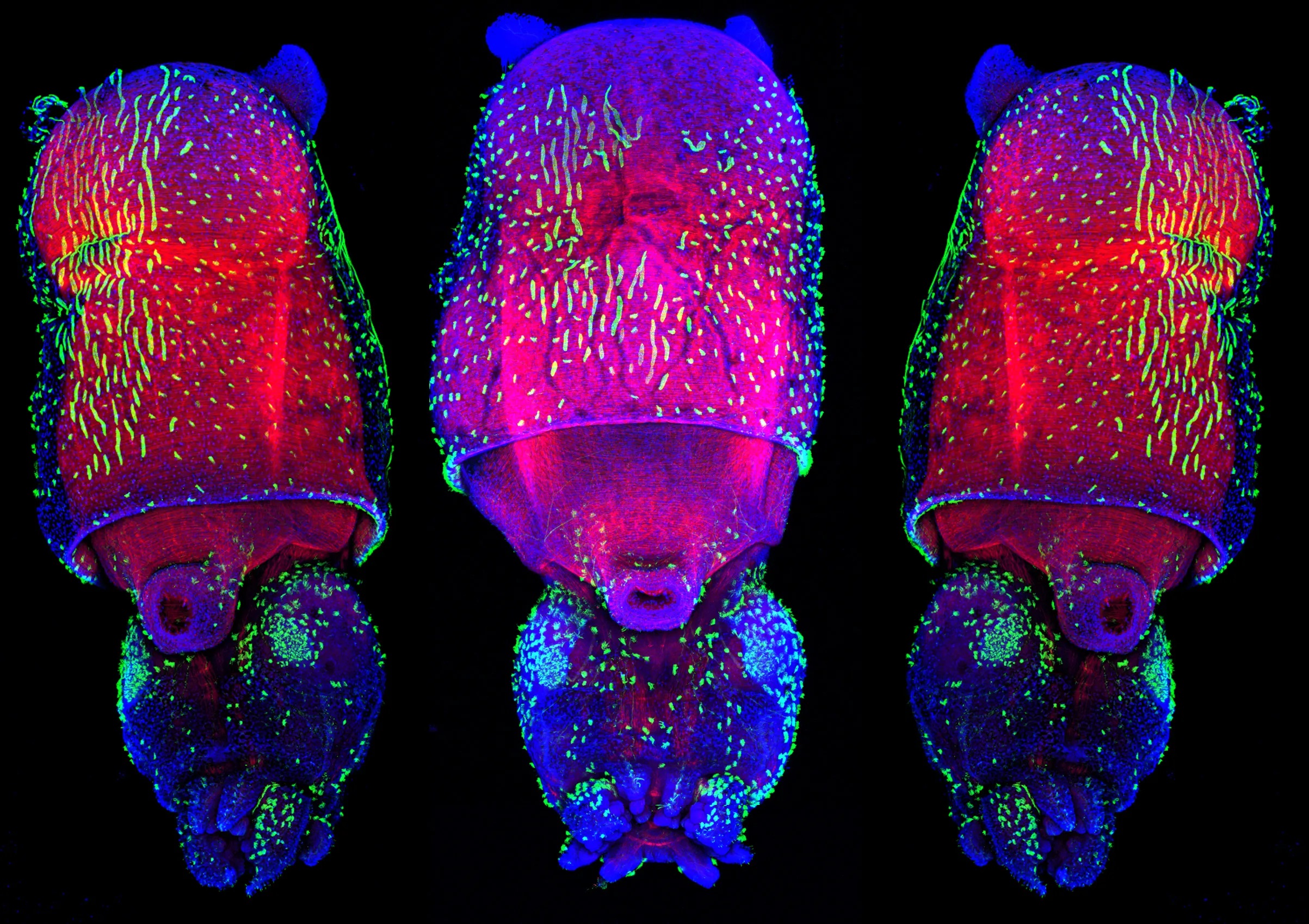
With the help of three-dimensional imaging of squid skin cells, researchers from the University of California, Irvine have found the structures that allow these creatures to change their look instantly from clear to any color.
The team of researchers, which included members from the Marine Biological Laboratory in Woods Hole, Massachusetts, discovered that in the brightly colored mantle tissues of squid, light-modifying cells called iridophores or iridocytes have stacked and winding columns of platelets made from a protein called reflectin. These columns act as Bragg reflectors, which only let certain wavelengths of light pass through or reflect them.
Researchers wrote an article in Science on June 26 about how they got ideas from the cells and their internal columnar structures to make a multispectral composite material that can change its qualities in the visible and infrared wavelengths.
Naturally, lots of animals use Bragg reflections for coloring their structures. According to the experts, the squid’s amazing ability to quickly and reversibly change from clear to colored is due to cells that have special subcellular columnar structures with sinusoidal refractive index distributions.
Longfin inshore squids, or Doryteuthis pealeii, are native to the Atlantic Ocean. The Marine Biological Laboratory has been studying this squid and other cephalopods for more than one hundred years, so the research team were lucky to be able to use a world-class knowledge to catch, handle, and study these unusual species.
Sources:
Georgii Bogdanov et al. (2025). Gradient refractive indices enable squid structural color and inspire multispectral materials, Science. DOI: 10.1126/science.adn1570
Scientists uncover cell structures that squids use to change their appearance. https://phys.org/news/2025-06-scientists-uncover-cell-squids.html
AI Disclosure Statement:
The Chromoscience uses AI-assisted tools to support the preparation and editing of science articles. Content is reviewed by the editor for clarity and consistency with the cited research before publication. Readers are encouraged to consult the original scientific publications for complete findings, methods, and limitations.



