
Advertisements
Advertisements
Related Topics

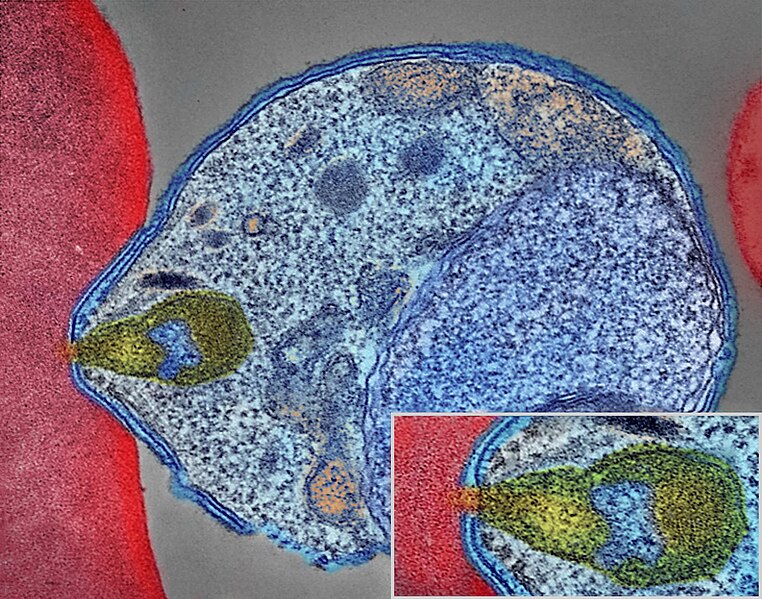
- Malaria is a serious and sometimes deadly disease caused by the parasite Plasmodium falciparum.
- Malaria is usually transmitted by infected Anopheles mosquitoes.
- The progression in controlling the disease stalled and the need for an effective and deployable vaccine has been emphasized.
- RTS,S/AS01 is the world’s first malaria vaccine shown to provide protection against malaria in young children.[1]
- RTS,S/AS01 is the most effective malaria vaccine up to date and showed 55.8% efficacy over 12 months in African children.
- Researchers conducted a double-blind study of a low-dose circumsporozoite protein-based vaccine called R21.
- Circumsporozoite protein is a secreted protein of the sporozoite stage of the malaria parasite.[2]
- Two different doses of adjuvant, Matrix-M™, were added to the R21 vaccine.
- An adjuvant is a substance that increases the effectiveness of a vaccine.
- The group composed of 5 to 17 month-old children in Nanoro, Burkina Faso.
- Prior to the malaria season, vaccinations were administered every 4 weeks.
- Three vaccinations were administered with a fourth dose one year later.
- Over one year, the safety, immunogenicity, and efficacy were evaluated.
- 450 children were randomized to receive the R21-Matrix-M™ vaccine or a control rabies vaccine.
- R21-Matrix-M™ had a 43 favorable safety profile.
- After 6 months, 29.5% who received R21-Matrix-M™ with low dose adjuvant developed malaria.
- 26% who received R21-Matrix-M™ with high-dose adjuvant developed malaria.
- 71.4% who received the control rabies vaccine developed malaria.
- On average, 72.25% who received R21-Matrix-M™ did not develop clinical malaria.
- Vaccine efficacy was 74% and 77% in the low and high dose adjuvant groups respectively.
- After one year, vaccine efficacy remained at 77% in the high-dose adjuvant group.
- After 28 days from the third vaccination, the individuals showed a high concentration of malaria-specific antibodies.
- Malaria-specific antibodies were doubled in a higher adjuvant dose.
- Antibodies diminished however, they were boosted to levels similar to peak concentrations after the primary series of vaccinations following the fourth dose administered one year later.
Related Video:
Sources:
https://papers.ssrn.com/sol3/papers.cfm?abstract_id=3830681
[1] https://www.malariavaccine.org/malaria-and-vaccines/rtss
[2] Porter, Michael; Jennifer Nicki; Christopher Pool (June 2013). “Transgenic Parasites Stably Expressing Full-Length Plasmodium falciparum Circumsporozoite Protein as a Model for Vaccine Down-Selection in Mice Using Sterile Protection as an Endpoint”. Clinical and Vaccine Immunology. 20 (6): 803–810. doi:10.1128/cvi.00066-13. PMC 3675977. PMID 23536694
Advertisements
Advertisements
AI Disclosure Statement:
The Chromoscience uses AI-assisted tools to support the preparation and editing of science articles. Content is reviewed by the editor for clarity and consistency with the cited research before publication. Readers are encouraged to consult the original scientific publications for complete findings, methods, and limitations.