

Related Topics

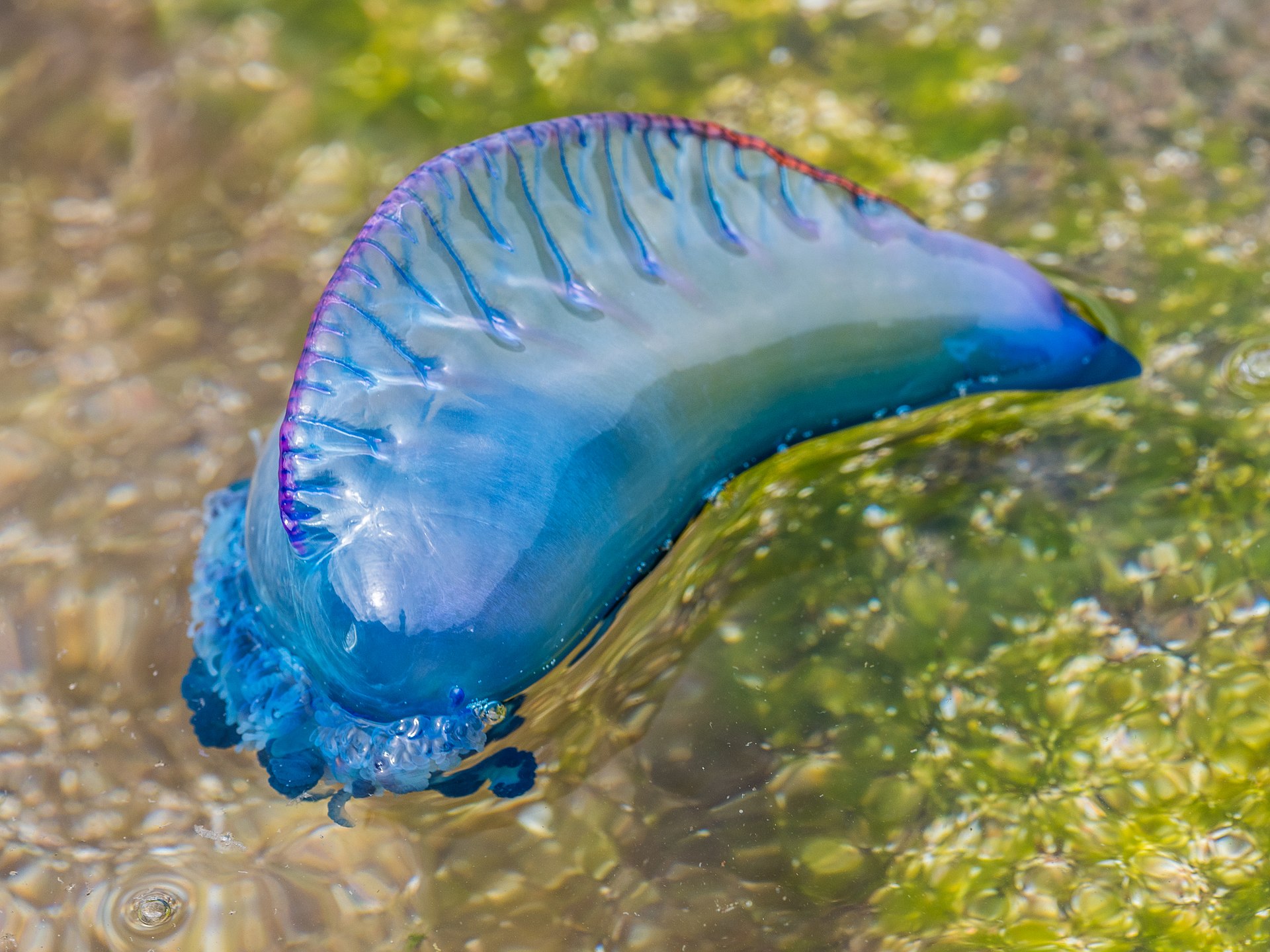
The Portuguese man o’ war, or bluebottle, was once thought to be a single, worldwide distributed species wandering freely over the ocean. However, it has recently been discovered to be at least four separate species with diverse morphology, genetics, and distribution.
Yale University researchers and Australian researchers from UNSW and Griffith University sequenced the genomes of 151 Physalia species from all over the world to discover this remarkable diversification.
The Current Biology study showed significant proof of reproductive isolation among five genetic generations, rejecting the long-held belief that the open ocean held single, well-mixed populations.
The scientists were surprised since they thought the creatures were all the same. Despite sharing boundaries, genetic evidence reveal they’re separate and not interbreeding. The gas-filled float and muscular crest of the bluebottle catch the wind and sail the sea surface, making it ideal for long-distance navigation.
The research group identified genomic lineages with four physical forms from hundreds of citizen-science pictures on iNaturalist.org using an integrative technique. Modern genomic evidence confirms these characteristics, which were proposed as different species in the 18th and 19th centuries but ultimately discarded.
The study describes Physalia minuta, a new species found between New Zealand and Australia, together with P. physalis, utriculus, and megalista. Advanced ocean circulation modeling divides each species into genetically separate groups determined by regional winds and ocean currents.
Due to wind and current, one species of bluebottle drifts throughout the open waters, connecting them globally; however, that is not the case. What’s really cool about Eastern Australia is that experts have found many species that have changed over time even though they might live together.
When you assume they’ll interact in the same environment, why did they become separate species? What pressure of selection caused species to differentiate themselves?
The researchers said further studies of the physical, environmental, and biological mechanisms that created and sustained this variation in genes will help reframe science’s expectations of open-ocean biodiversity.
Sources:
Church, S. H., Abedon, R. B., Ahuja, N., Anthony, C. J., Destanović, D., Ramirez, D. A., Rojas, L. M., Albinsson, M. E., Álvarez Trasobares, I., Bergemann, R. E., Bogdanovic, O., Burdick, D. R., Cunha, T. J., Damian-Serrano, A., D’Elía, G., Dion, K. B., Doyle, T. K., Gonçalves, J. M., Gonzalez Rajal, A., Haddock, S. H. D., … Dunn, C. W. (2025). Population genomics of a sailing siphonophore reveals genetic structure in the open ocean. Current biology : CB, S0960-9822(25)00682-7. Advance online publication. https://doi.org/10.1016/j.cub.2025.05.066
The Portuguese man o’ war includes four distinct species, new research reveals. https://phys.org/news/2025-06-portuguese-war-distinct-species-reveals.html
AI Disclosure Statement:
The Chromoscience uses AI-assisted tools to support the preparation and editing of science articles. Content is reviewed by the editor for clarity and consistency with the cited research before publication. Readers are encouraged to consult the original scientific publications for complete findings, methods, and limitations.



