
Related Topics

After a sperm fertilizes the egg, the surrounding egg coat tightens, mechanically blocking subsequent sperm from entering and causing the embryo to die. This is according to a new study conducted by Karolinska Institutet researchers and published in the journal Cell. The study also reveals how mutations in egg coat proteins might result in female infertility, which could lead to novel contraceptive approaches.
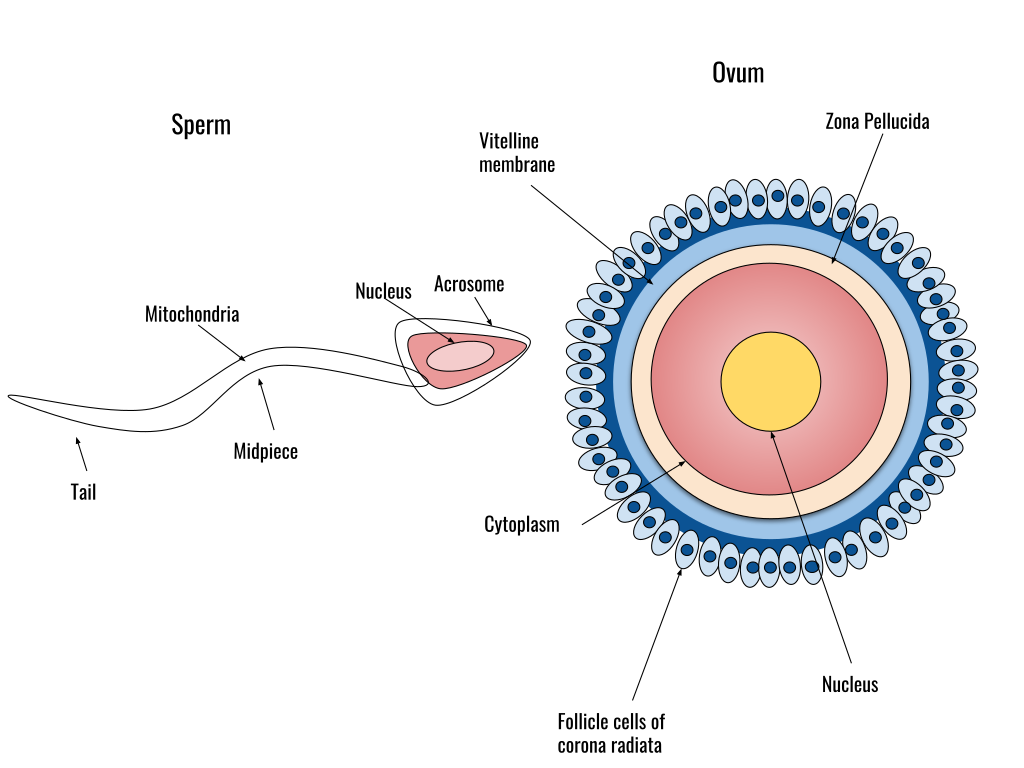
In mammals, fertilization happens when a sperm sticks to the egg coat, a filamentous extracellular envelope through which the sperm must pass before fusing with the egg. An international team of researchers has now mapped in detail the structure and function of the protein ZP2, which is an egg coat filament component that regulates how eggs and sperm interact during fertilization.
It was previously known that ZP2 is cleaved after the first sperm enters the egg, and researchers explain how this process makes the egg coat tougher and impenetrable to other sperm. This avoids polyspermy—the fusing of many sperm with a single egg—which is deadly to the embryo.
Changes in the egg coat following fertilization are also important for female fertility because they shield the growing embryo until it implants in the uterus. As a result, the new findings could have significance for the development of non-hormonal contraceptives that interfere with egg coat production. Furthermore, the finding clarifies egg coat-related female infertility.
Sources:
ZP2 cleavage blocks polyspermy by modulating the architecture of the egg coat, Cell (2024). DOI: 10.1016/j.cell.2024.02.013. www.cell.com/cell/fulltext/S0092-8674(24)00179-X
https://phys.org/news/2024-03-discovery-reveals-egg-sperm-entry.html
AI Disclosure Statement:
The Chromoscience uses AI-assisted tools to support the preparation and editing of science articles. Content is reviewed by the editor for clarity and consistency with the cited research before publication. Readers are encouraged to consult the original scientific publications for complete findings, methods, and limitations.