

Related Topics

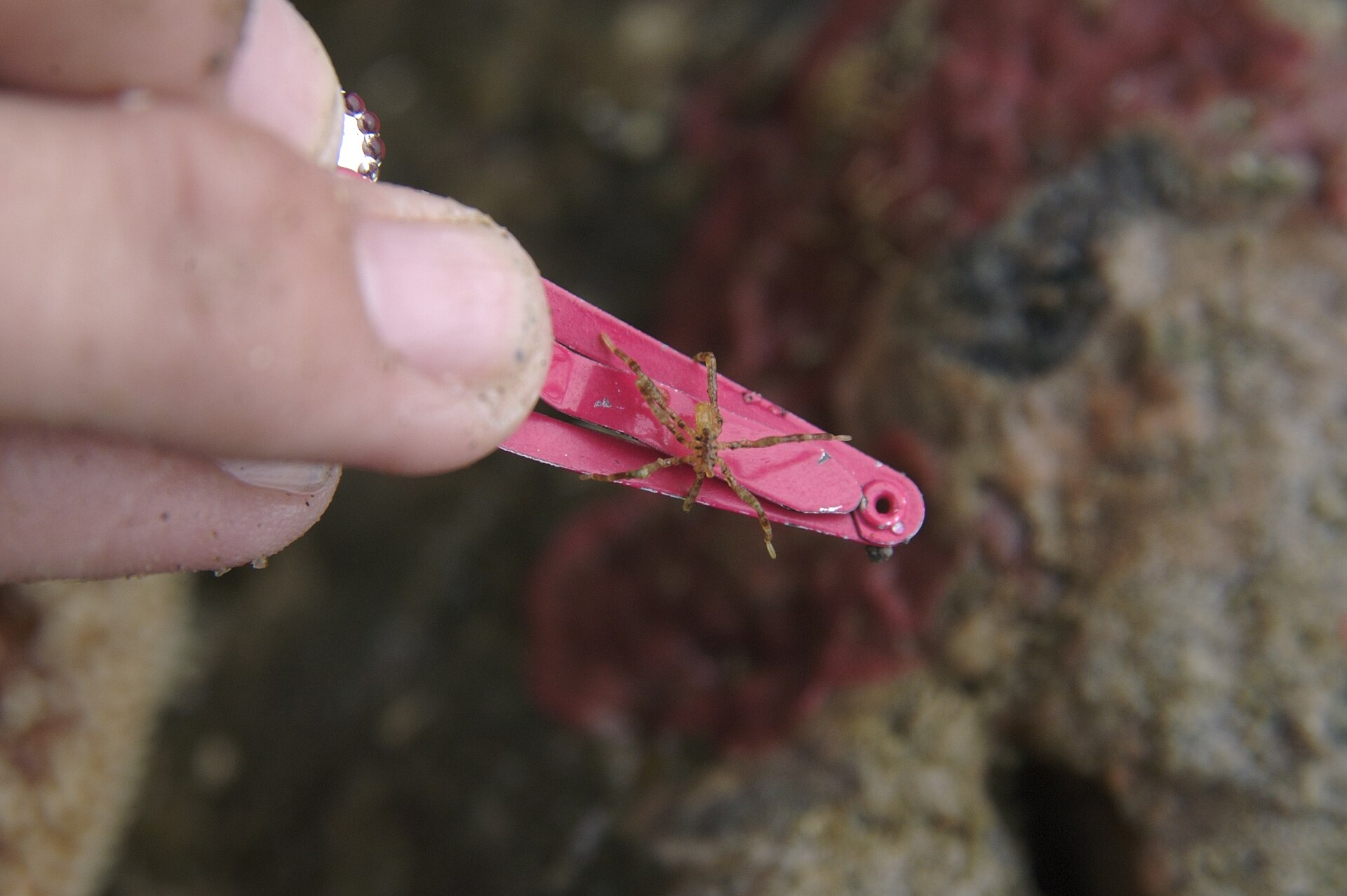
Sea spiders, or pycnogonids, are marine arthropods found throughout the world, but their diversity in the Salish Sea has remained surprisingly poorly documented. In this study, Cormac Toler-Scott and colleagues carried out the first comprehensive investigation of coastal sea spiders from this region using both detailed anatomy and molecular data. The researchers examined seven species collected from the Salish Sea and nearby waters along the west coast of Vancouver Island. By combining scanning electron microscopy with DNA-based phylogenetic analyses, the team was able to compare fine anatomical features while also examining evolutionary relationships among the species (Toler-Scott et al., 2026).
Five previously known species were carefully redescribed: Achelia alaskensis, Achelia gracilipes, Anoplodactylus erectus, Anoplodactylus viridintestinalis, and Phoxichilidium quadradentatum. Detailed imaging allowed the researchers to document features that are important for identifying sea spiders, including the shapes and arrangements of appendages, spines, sensory structures, and reproductive limbs. Adding molecular information provided an independent way to test how these animals are related. This combined approach is especially valuable for pycnogonids because many species are small and can look remarkably similar, making identification based only on outward appearance difficult (Toler-Scott et al., 2026).
One of the most important results was the description of two previously unknown species: Tanystylum kiixin and Callipallene pilosuspedes. T. kiixin was found closely associated with the colonial hydroid Plumularia setacea, suggesting that this sea spider may have a particularly close ecological relationship with that organism. The second new species, C. pilosuspedes, has distinctive hairy-looking legs and conspicuous reddish eyes; its name refers to its notably pilose, or hairy, feet. These discoveries demonstrate that even in a relatively well-studied coastal region such as the Pacific Northwest, small marine invertebrates can remain undocumented until researchers combine close morphological examination with modern molecular techniques.
Beyond identifying new species, the researchers produced a dichotomous identification key for sea spiders occurring in the Salish Sea and along western Vancouver Island. Such tools can help future scientists, students, and biodiversity surveys identify pycnogonids more consistently. Establishing accurate species records is particularly important for long-term ecological monitoring because researchers need to know which organisms are present before they can recognize changes in distribution or biodiversity. The study did not directly test the effects of climate change or human disturbance, but it establishes an important taxonomic and genetic baseline that future studies can use to investigate how coastal marine communities change over time.
References
Toler-Scott, C., Park, E., Gordon, H., & Leander, B. S. (2026). Sea spiders of the Salish Sea: Comparative morphology and molecular phylogenetic analysis of seven coastal species (Arthropoda, Pycnogonida). Organisms Diversity & Evolution. https://doi.org/10.1007/s13127-026-00707-3. DOI
Primary research article – Springer Nature
University of British Columbia, Department of Zoology. (2026). Hairy-legged red-eyed sea spiders discovered in the Salish Sea. Zoology UBC
UBC Zoology article
Yale Peabody Museum of Natural History. (2015). Pycnogonum litorale (YPM IZ 030249) [Photograph by Eric A. Lazo-Wasem]. Wikimedia Commons. CC0 1.0. Wikimedia Commons
AI Disclosure Statement:
The Chromoscience uses AI-assisted tools to support the preparation and editing of science articles. Content is reviewed by the editor for clarity and consistency with the cited research before publication. Readers are encouraged to consult the original scientific publications for complete findings, methods, and limitations.





Leave a Reply