
Related Topics

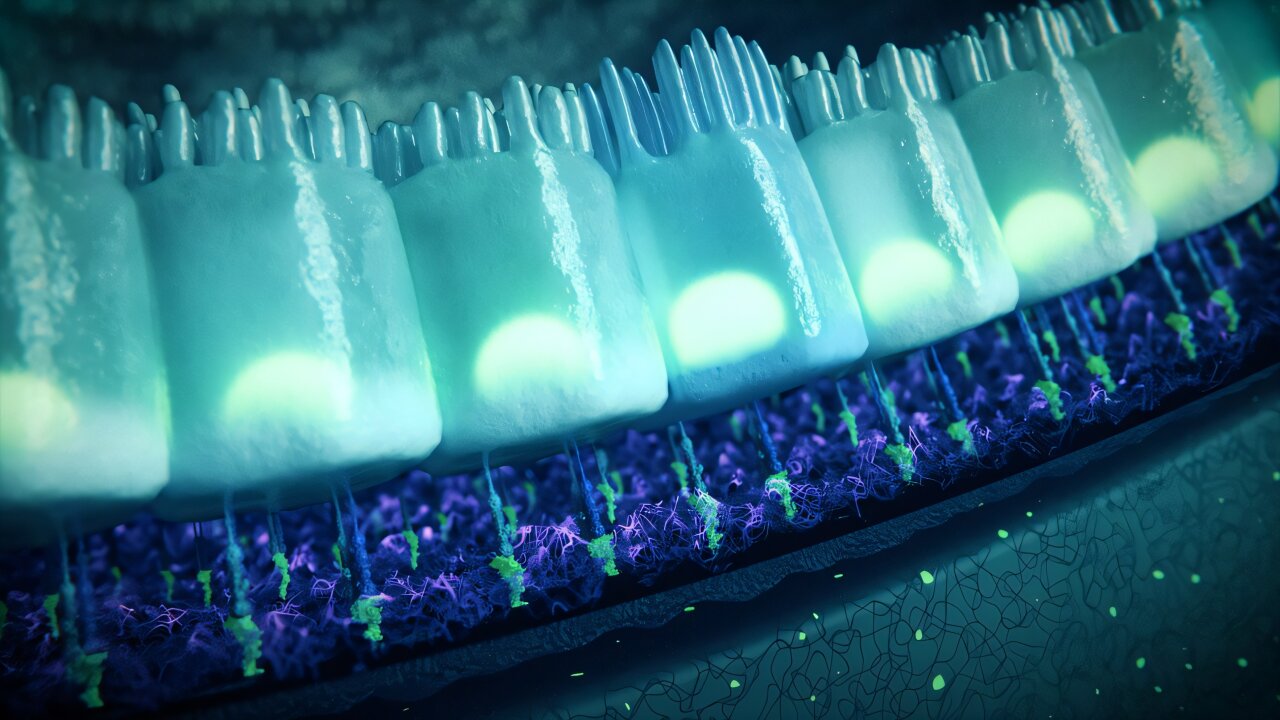
The Organoid group at the Hubrecht Institute has devised a new method for growing organoids. Organoids are miniature organs that are created in a lab and resemble the original organ. The researchers were able to create organoids utilizing Invasin, a bacteria-produced protein.
According to this study which was published on December 30 in the Proceedings of the National Academy of Sciences, Invasin provides a cost-effective, environmentally friendly, and animal-free substitute for existing techniques.
Organoids are tiny, artificially created structures that mimic actual organs. They are utilized to test novel medications, comprehend how diseases arise, and to better understand how organs function. The cells must grow in an environment resembling the body’s extracellular matrix in order to form organoids. This network of proteins, which includes collagen, supports cells and provides tissues with structure. This is comparable to the requirement for scaffolding when building a structure.
Currently, researchers cultivate organoids using extracts from a particular kind of extracellular matrix called the basement membrane. These extracts are useful, but they are costly, made from mice tumors, and their precise component is unclear. Because of these factors, scientists have been looking for a less expensive, more uniform, and animal-free substitute.
Sources:
Joost J.A.P.M. Wijnakker et al. (2024). Integrin-activating Yersinia protein Invasin sustains long-term expansion of primary epithelial cells as 2D organoid sheets, Proceedings of the National Academy of Sciences. DOI: 10.1073/pnas.2420595121
https://phys.org/news/2025-01-bacteria-sustainable-solution-organoids.html
AI Disclosure Statement:
The Chromoscience uses AI-assisted tools to support the preparation and editing of science articles. Content is reviewed by the editor for clarity and consistency with the cited research before publication. Readers are encouraged to consult the original scientific publications for complete findings, methods, and limitations.