
Related Topics

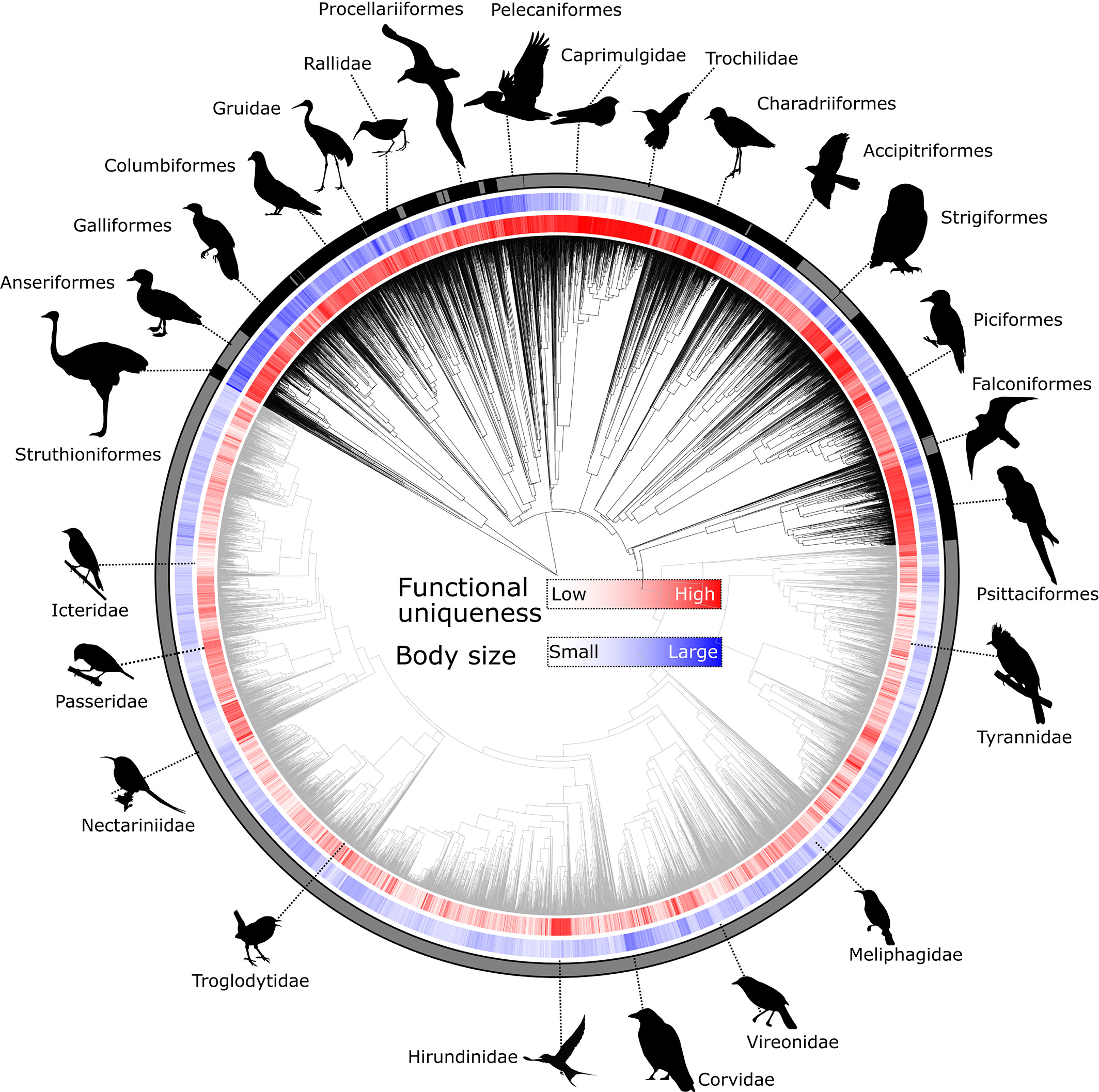
Jarome Ali, a Ph.D. candidate at Princeton University who completed the research at Imperial College London and was the principal author of the paper said that their work suggests that extinctions would most certainly prune a high fraction of unique species off the avian tree. The particular roles that these rare species provide in ecosystems will disappear if they become extinct.
Ecosystems will be severely affected if we do not take action to safeguard vulnerable species and prevent extinctions.
The authors of the research employed a collection of measurements taken from 9943 different bird species, including living birds and museum specimens. Physical characteristics such as beak size and form as well as the lengths of wings, tails, and legs were measured.
Based on the IUCN Red List’s current danger classifications for each species, the authors linked the morphological data with the risk of extinction. Then they performed simulations to see what would occur if the most endangered bird species were extinct.
The information utilized in the study was able to demonstrate that the most distinctive birds were also listed as threatened on the Red List, but it failed to demonstrate the relationship between avian uniqueness and extinction risk.
According to Jarome Ali, one theory is that species with the most unique ecological roles may be directly threatened by human influences since highly specialized organisms are less able to adapt to a changing environment. The relationship between distinctive features and extinction danger requires further study.
Sources:
Jarome Ali et al. (2022). Bird extinctions threaten to cause disproportionate reductions of functional diversity and uniqueness, Functional Ecology. DOI: 10.1111/1365-2435.14201
https://phys.org/news/2022-11-planet-unique-birds-higher-extinction.html
AI Disclosure Statement:
The Chromoscience uses AI-assisted tools to support the preparation and editing of science articles. Content is reviewed by the editor for clarity and consistency with the cited research before publication. Readers are encouraged to consult the original scientific publications for complete findings, methods, and limitations.