

Related Topics

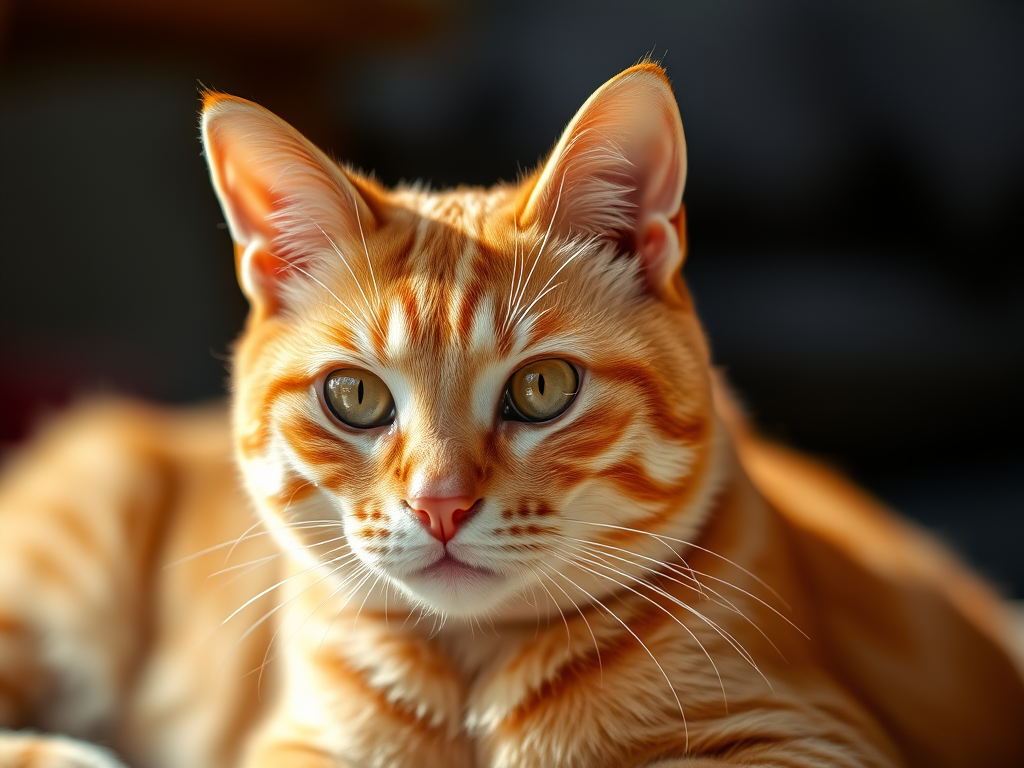
Scientists have proven that ginger-colored cats are special in some way. Researchers at Stanford Medicine have found the long-sought but rare genetic mutation that turns cats orange. This mutation doesn’t seem to happen in any other mammals.
The researchers said that the result helps us learn more about how small changes in the genes can lead to new traits.
Many animals, like tigers, golden retrievers, orangutans, and people with red hair, come in different shades of orange. But in domestic cats, orange coloration is linked to sex, with males being much more likely to have it.
Several species that have yellow or orange pigments have changes that only happen in one of two genes. Neither of these genes is linked to sex.
The study’s lead author is Greg Barsh, MD, Ph.D., who is a retired professor of genetics and pediatrics.
Scientists have found the mutations that cause pigment cells in the skin to make yellow or orange pigment instead of the normal brown or black pigment. But they didn’t have a good idea of where to look for the mutation that causes cats to have the same trait.
Because most orange cats were male, they knew that the trait, which they called “sex-linked orange,” was on the X chromosome. Women have XX chromosomes and men have XY chromosomes, just like in most mammals. A male cat with sex-linked orange will be completely orange. A female cat, on the other hand, would have to receive sex-linked orange on both X chromosomes in order to be completely orange, which is less likely to happen.
If a female cat has one copy of the sex-linked orange gene, she will look partly orange, either with a tortoiseshell pattern or calico pattern of orange, black, and white spots. In females, a natural process known as random X inactivation means that one X chromosome is turned off in every cell. This creates a patchwork of pigment cells, some of which show sex-linked orange and some of which do not.
Sources:
Molecular and genetic characterization of sex-linked orange coat color in the domestic cat. (2025). Current Biology. DOI: 10.1016/j.cub.2025.04.055.
Scientists track down mutation that makes orange cats orange. https://phys.org/news/2025-05-scientists-track-mutation-orange-cats.html
AI Disclosure Statement:
The Chromoscience uses AI-assisted tools to support the preparation and editing of science articles. Content is reviewed by the editor for clarity and consistency with the cited research before publication. Readers are encouraged to consult the original scientific publications for complete findings, methods, and limitations.



