
Advertisements
Advertisements
Related Topics

- Deserts fill a significant part of the Earth’s surface and continue to expand due to an effect of climate change.
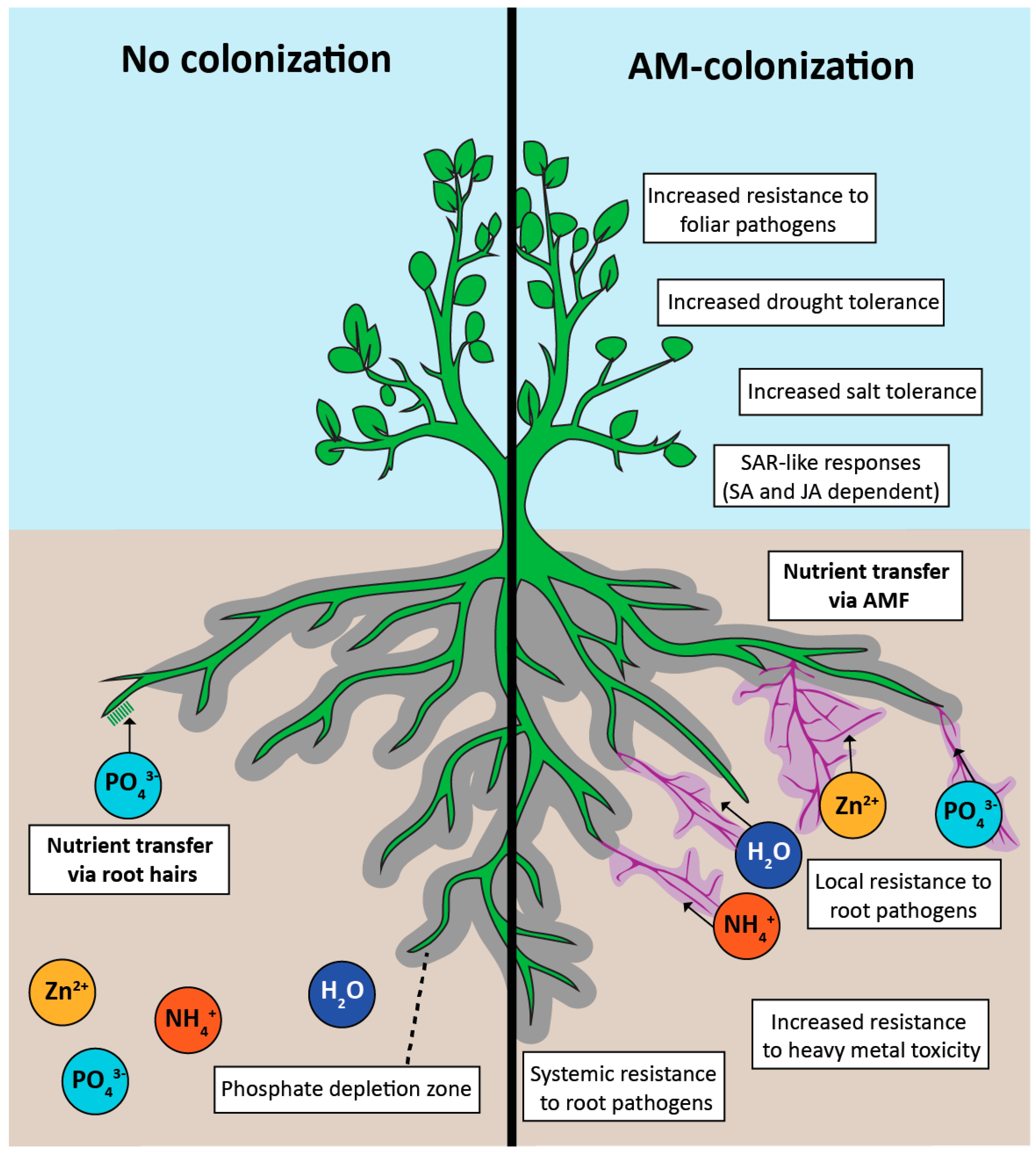
- Arbuscular mycorrhiza is a type of fungal root in which the symbiont fungus enters the root’s cortical cell of a vascular plant.[1]
- Mutualistic arbuscular mycorrhizal fungi may be important in plant roots, particularly in drought stressed environment such as deserts.
- Researchers provide the characterization of the arbuscular mycorrhizal fungi found in several desert locations around the world.
- Researchers utilized Illumina MiSeq and sequenced arbuscular mycorrhizal fungal DNA from desert soil samples in six different geographic locations.
- Researchers recorded 50 arbuscular mycorrhizal fungal phylotypes.
- Phylotype is an overall similarity used to classify several organisms into a group according to their phenetic relationship.[2]
- The most common family found was Glomeraceae.
- Researchers also found Claroideoglomeraceae, Diversisporaceae, and Acaulosporaceae however, their frequencies and abundances were low.
- The site with the highest diversity was in Israel’s Negev desert with 35 virtual taxa.
- Sites in Argentina, Australia, Kazakhstan and United States were found to have lower richness and diversity.
- Saudi Arabian desert which has harsh conditions yielded low richness with only three Diversispora virtual taxa.
- Although the arbuscular mycorrhizal fungal taxa recorded in the desert were mostly ecological and geographically widespread, four out of the six sites constitute more desert-associated taxa than expected at random.
- The phylogenetic/taxonomic composition of arbuscular mycorrhizal fungal communities was mostly driven by pH.
- Data show that desert arbuscular mycorrhizal fungal community composition and diversity are dependent on ecological conditions.
- Arbuscular mycorrhizal fungal community composition can also be related to harsh abiotic conditions.
- Arbuscular mycorrhizal fungal virtual taxa present in soil samples were phylogenetically clustered than the global taxon pool.
- Results suggest that desert fungal collections may have been shaped by non-random assembly mechanisms, particularly habitat filtering.
- Climate change may likely trigger desertification in many locations and more research on arbuscular mycorrhizal fungi should be performed to understand ecosystem change.
Sources:
Vasar, M., Davison, J., Sepp, S. K., Öpik, M., Moora, M., Koorem, K., Meng, Y., Oja, J., Akhmetzhanova, A. A., Al-Quraishy, S., Onipchenko, V. G., Cantero, J. J., Glassman, S. I., Hozzein, W. N., & Zobel, M. (2021). Arbuscular Mycorrhizal Fungal Communities in the Soils of Desert Habitats. Microorganisms, 9(2), 229. https://doi.org/10.3390/microorganisms9020229
[1] https://en.wikipedia.org/wiki/Arbuscular_mycorrhiza
[2] https://en.wikipedia.org/wiki/Phenetics
Advertisements
Advertisements
AI Disclosure Statement:
The Chromoscience uses AI-assisted tools to support the preparation and editing of science articles. Content is reviewed by the editor for clarity and consistency with the cited research before publication. Readers are encouraged to consult the original scientific publications for complete findings, methods, and limitations.