

Related Topics

- Chronic hepatitis B virus or HBV is a DNA virus in the genus Orthohepadnavirus and causes the disease hepatitis B.[1][2][3][4]
- HBV also causes cancer that does not have curative treatments.
- HBV infection is a worldwide health issue and causes more than 800,000 deaths per year.
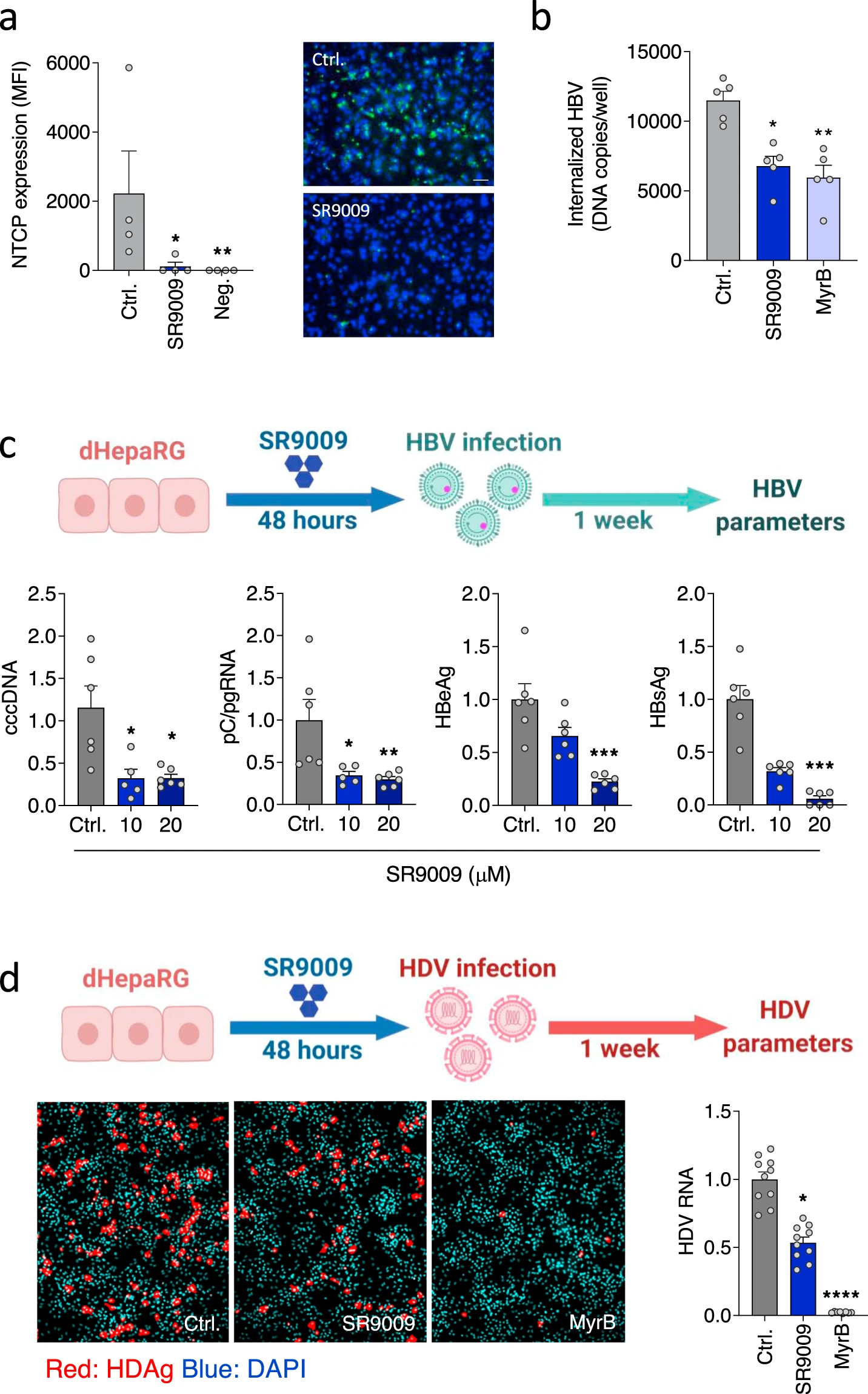
- HBV uses the receptor sodium taurocholate co-transporting polypeptide or NTCP to gain entry into the host liver cell.[6]
- Inside the nucleus of liver cell, viral genome forms into covalent closed circular DNA or cccDNA that is difficult to eradicate. [5]
- The liver transcriptome has master regulatory proteins called REV-ERB and circadian factors BMAL1/CLOCK however, the role of these master regulatory proteins in HBV replication is unknown.
- Researchers used a circadian cycling liver cell-model.
- Researchers demonstrated that REV-ERB regulates NTCP-dependent hepatitis B and delta virus particle entry.
- Importantly, activation of REV-ERB by drugs inhibits HBV infection in mice.
- Researchers also discovered that BMAL1 binds to HBV genome and promotes viral activity.
- Inhibition by drugs of BMAL1 reduces the level of pre-genomic RNA which is important in viral replication.
- This study highlights the role of REV-ERB and BMAL1 master regulatory proteins of the liver transcriptome in regulating HBV.
Sources:
Zhuang, X., Forde, D., Tsukuda, S. et al. Circadian control of hepatitis B virus replication. Nat Commun 12, 1658 (2021). https://doi.org/10.1038/s41467-021-21821-0
[1] Ryu W (2017). Molecular Virology of Human Pathogenic Viruses. Academic Press. pp. 247–260. ISBN 978-0-12-800838-6.
[2] Hunt R (21 November 2007). “Hepatitis viruses”. University of Southern California, Department of Pathology and Microbiology. Retrieved 13 March 2008.
[3] http://www.ictv.global/report/hepadnaviridae
[4] Hassan MM, Li D, El-Deeb AS, Wolff RA, Bondy ML, Davila M, Abbruzzese JL (October 2008). “Association between hepatitis B virus and pancreatic cancer”. Journal of Clinical Oncology. 26 (28): 4557–62. doi:10.1200/JCO.2008.17.3526. PMC 2562875. PMID 18824707
[5] https://medical-dictionary.thefreedictionary.com/cccDNA
[6] Eller, C., Heydmann, L., Colpitts, C. C., Verrier, E. R., Schuster, C., & Baumert, T. F. (2018). The functional role of sodium taurocholate cotransporting polypeptide NTCP in the life cycle of hepatitis B, C and D viruses. Cellular and molecular life sciences : CMLS, 75(21), 3895–3905. https://doi.org/10.1007/s00018-018-2892-y
AI Disclosure Statement:
The Chromoscience uses AI-assisted tools to support the preparation and editing of science articles. Content is reviewed by the editor for clarity and consistency with the cited research before publication. Readers are encouraged to consult the original scientific publications for complete findings, methods, and limitations.



