

Related Topics

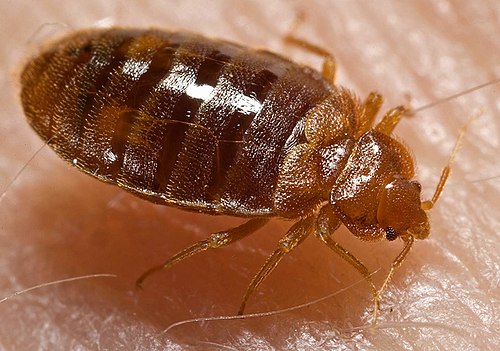
Bed bugs have thrived on humans since a few courageous ones climbed up a bat and secured themselves on a Neanderthal going out of a cave 60,000 years ago.
Since the Last Glacial Maximum, or ice age, 20,000 years ago, the more fearful bed bugs that remained with the bats have decreased.
Two Virginia Tech scientists recently compared the complete genome sequences of these two distinct bed bug groups. The human-associated lineage followed a similar demographic path as humans and may be the first urban pest.
The researchers examined changes in effective population size, which is the amount of reproducing individuals influencing to the next generation, to learn about their background.
The researchers believe that bed bugs’ historical and evolutionary symbiosis with humans will influence models that forecast pest and disease transmission with urban population growth.
Scientists may discover human and pest traits that evolved together throughout urban growth by directly linking human global expansion to urban pests like bed bugs.
Initial declines in both populations coincided with the Last Glacial Maximum, but the bat-associated group never recovered and is now declining. The human-associated lineage rebounded and their effective population went up.
The researchers point to 12,000-year-old huge civilizations that became cities like Mesopotamia.
That seems reasonable since modern day humans left caves 60,000 years ago.
Bed bugs were present in the caves with the humans, and when they departed, the humans took a portion of the population, resulting in a reduction in genetic diversity within the human-associated lineage.
As humans grew in population and lived in cities, the human-associated bed bug group underwent exponential population explosion.
Using the complete genome data, the researchers can investigate this 245,000-year-old lineage separation. Since the two groups exhibit genetic variations but not sufficient to have developed into two distinct species, researchers are intrigued in the recent evolutionary changes of the human-associated lineage.
Looking at the last 100–120 years will be intriguing. The old world had many bed bugs, but a pesticide for pest control killed them. They were assumed to be gone yet they returned within five years and resisted the chemical.
A previous study found a gene mutation that might be linked to insecticide resistance, and scientists are now studying bed bugs’ genomic evolution and resistance to insecticides.
Sources:
Were bed bugs the first urban pest insect? Genome-wide patterns of bed bug demography mirror global human expansion, Biology Letters. https://royalsocietypublishing.org/doi/10.1098/rsbl.2025.0061
Bed bugs are most likely the first human pest, new research shows. https://phys.org/news/2025-05-bed-bugs-human-pest.html
AI Disclosure Statement:
The Chromoscience uses AI-assisted tools to support the preparation and editing of science articles. Content is reviewed by the editor for clarity and consistency with the cited research before publication. Readers are encouraged to consult the original scientific publications for complete findings, methods, and limitations.



