

Related Topics

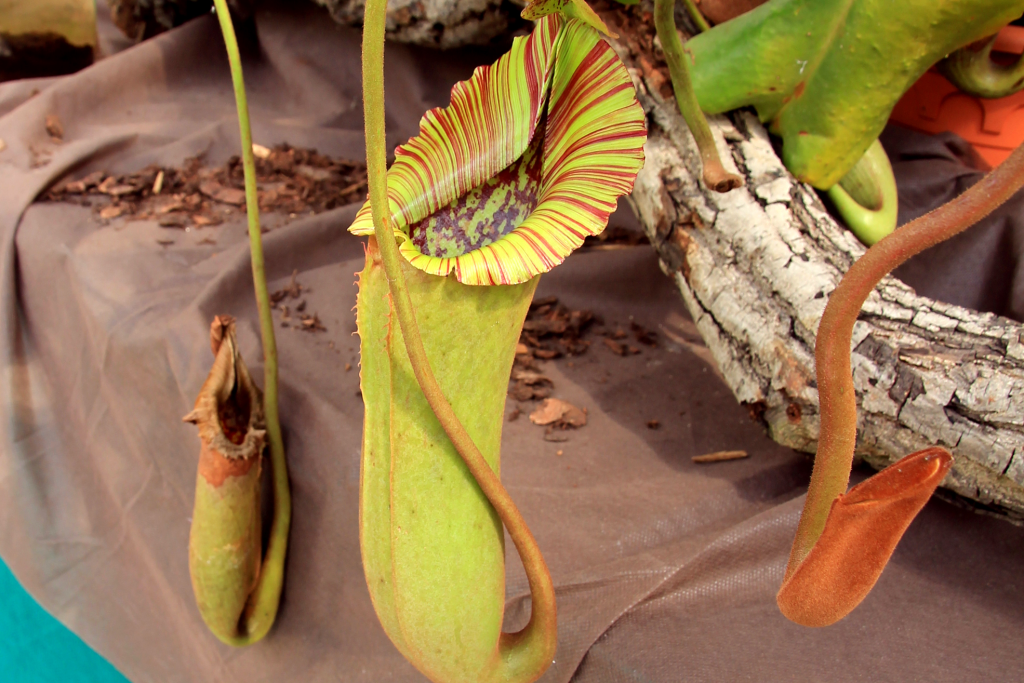
Dr. Alastair Robinson, Manager Biodiversity Services at Royal Botanic Gardens Victoria, and colleagues in Western Australia, Queensland, Malaysia, and Germany have shown in a study released today in the Annals of Botany that some Nepenthes, known as the tropical pitcher plants, obtain more nitrogen and, by extension, nutrients, from mammal droppings than those that capture insects.
Dr. Robinson claims that a small number of species of Nepenthes have adapted to eating animal waste instead of meat.
Compared to other Nepenthes, nitrogen uptake is over twice as high in species that digest mammalian feces. Insect food is scarce at altitudes above 2200 meters in the tropics, so these plants make the most of their limited resources by collecting a smaller amount of high-quality nitrogen from things like treeshrew droppings.
Some of the most well-known examples of carnivorous plants are species of Nepenthes, which have evolved to trap and digest organic matter in their modified leaves in order to get nitrogen and other vital nutrients that are often in short supply in their environments. These findings may provide an explanation for why some of the most stunning Nepenthes species are found at high elevations, where investment in food-collecting processes is larger and more vital to survival.
The researchers compared the species that catch invertebrates to those that are adapted for the collection of mammal scats using isotope enrichment in Nepenthes tissue samples. They also tested co-occurring non-carnivorous plants as reference controls.
They observed that all Nepenthes studied had much higher amounts of the heavier 15N isotope of nitrogen compared to surrounding non-carnivorous plants, with the levels being even higher in the Nepenthes adapted to consume mammalian feces.
In 2009, researchers initially reported on their symbiotic relationship with mountain tree shrews, although it was unclear whether or not the shrews were benefiting from the relationship.
Sources:
Adam T Cross, Antony van der Ent, Miriam Wickmann, Laura M Skates, Sukaibin Sumail, Gerhard Gebauer, Alastair Robinson, Capture of mammal excreta by Nepenthes is an effective heterotrophic nutrition strategy, Annals of Botany, Volume 130, Issue 7, December 2022, Pages 927–938. https://doi.org/10.1093/aob/mcac134
https://phys.org/news/2023-01-carnivorous-capturing-mammal.html
AI Disclosure Statement:
The Chromoscience uses AI-assisted tools to support the preparation and editing of science articles. Content is reviewed by the editor for clarity and consistency with the cited research before publication. Readers are encouraged to consult the original scientific publications for complete findings, methods, and limitations.



