

Related Topics

Senescence refers to the gradual deterioration and alteration of a person’s body as they get older. Maintaining cell cultures for therapeutic application is made difficult by senescence, which occurs in stem cells despite their unique capacity to differentiate into various cell types. Because of their importance in a wide range of medications, the biomolecules generated by these cell cultures are lost when the cells reach a senescent state, and even worse, biomolecules antagonistic to these therapeutics are formed.
There are techniques for removing senescent cells from a culture, however they have a poor capture rate. Postdoctoral fellow in the lab of chemical and biomolecular engineering professor Hyunjoon Kong (M-CELS leader/EIRH/RBTE) Ryan Miller argues that preventing cells from approaching senescence is preferable to destroying them after they reach a certain age.
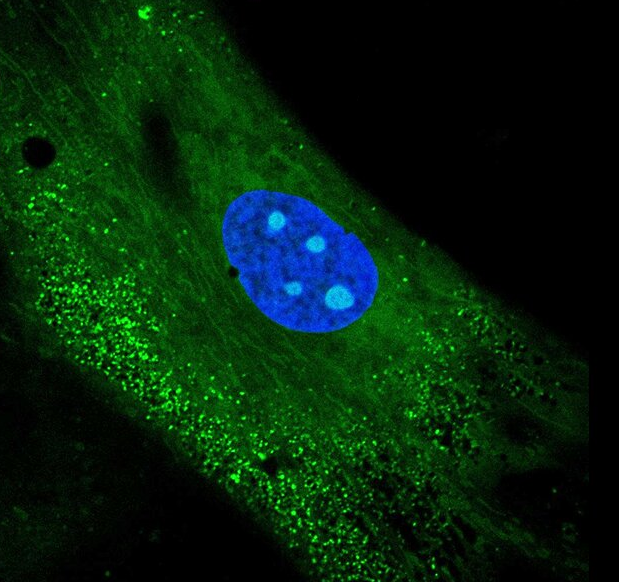
The researchers aim to maintain healthy cell cultures of mesenchymal stem cells, which originate from adipose tissue and create biomolecules that are crucial for therapies. Miller argues that conditioning the clinical environment in which stem cells thrive in order to manage the oxidative state is the best strategy to prevent senescence. The cells can be forced out of their senescent state and made to act like healthy stem cells by administering antioxidants.
Although cellular senescence can be postponed with the use of antioxidant treatments, the existing methods of antioxidant administration have a number of drawbacks. However, a new technique of delivering antioxidants to stem cells has been described in a paper recently published by the labs of Kong and Hee-Sun Han (GNDP/IGOH), an assistant professor of chemistry, with Miller as the first author. Advanced Functional Materials is where you can find the study.
Antioxidants in the form of polymer-stabilized crystals are used in the newly developed method. Microfluidics is a technique that allows scientists to operate with extremely small volumes of fluid; this allows them to develop crystals in a controlled environment, ensuring that each crystal is the same size and dose and reducing the potential for drug release variations across cells. Miller explained that by using microfluidics, each drop functions as a small reactor, which allows for the production of small, uniform crystals and so reduces variability in drug release. The medicine is released gradually and over a longer period of time since the crystals disintegrate more slowly than conventional procedures.
The researchers learned that the narrow variation in the drug’s release profile is really important. There’s this bursting phase when you add drugs that dissolve in water, and then not much else happens. However, the crystal permits this consistent release over a prolonged period, which aids in keeping the necessary ideal concentrations within a narrow range.
When typical antioxidants are put into water or biological fluid, they lose their vital activity within six hours. However, the new antioxidant crystal maintains its bioactivity for at least two days, allowing researchers to both increase the drug’s half-life and decrease the frequency with which antioxidants must be added to cell culture conditions. Reproducibility is one of the greatest obstacles in biomanufacturing, yet this method helps to reduce variation in the biomolecules that stem cells produce.
By keeping stem cell cultures from entering the senescence state for a bit longer, more of the necessary biomolecules for therapies may be harvested. Miller also suggests this technique might be utilized for patient-derived stem cell therapies, in which the patient’s own biomolecules are used to repair injuries and diseases of the tissues.
The researchers said that when they use biomolecules from donors instead of the patient, that can have a host effect. Biomolecules for a therapy can be extracted from stem cells taken from a patient, expanded in a bioreactor, and then used to treat the patient. This is effective for a 20-year-old, however it fails when applied to an older patient because of the abundance of senescent cells in their bodies, which do not produce therapeutically useful macromolecules. By rescuing these cells and restoring their normal behavior, it can provide the patient with a greater quantity of biomolecules with therapeutic potential.
However, the team acknowledges that there are numerous potential applications for this technology beyond only regulated delivery of antioxidants to stem cell cultures, and they plan to continue working to optimize the biomanufacturing process. Since senescence affects the vast majority of cells, this method might be used on additional cell cultures with potential medical and therapeutic applications. In addition, the antioxidants, or maybe other medications, might be delivered directly into the target tissue of a patient via the crystals, where they would be released slowly and steadily.
According to Han, the paper’s uniqueness lies in its potential applicability to a wide range of hydrophilic medicines, disease models, and research approaches. They demonstrated that a continual, slow release of this medicine is possible over a long period of time. Many promising research avenues and technological developments are ahead.
Sources:
Miller, Ryan & Lee, Jonghwi & Kim, Yang & Han, Hee-Sun & Kong, Hyunjoon. (2023). In‐Drop Thermal Cycling of Microcrystal Assembly for Senescence Control (MASC) with Minimal Variation in Efficacy. Advanced Functional Materials. 10.1002/adfm.202302232. https://onlinelibrary.wiley.com/doi/10.1002/adfm.202302232
https://phys.org/news/2023-06-drug-delivery-method-reverse-senescence.html
AI Disclosure Statement:
The Chromoscience uses AI-assisted tools to support the preparation and editing of science articles. Content is reviewed by the editor for clarity and consistency with the cited research before publication. Readers are encouraged to consult the original scientific publications for complete findings, methods, and limitations.



